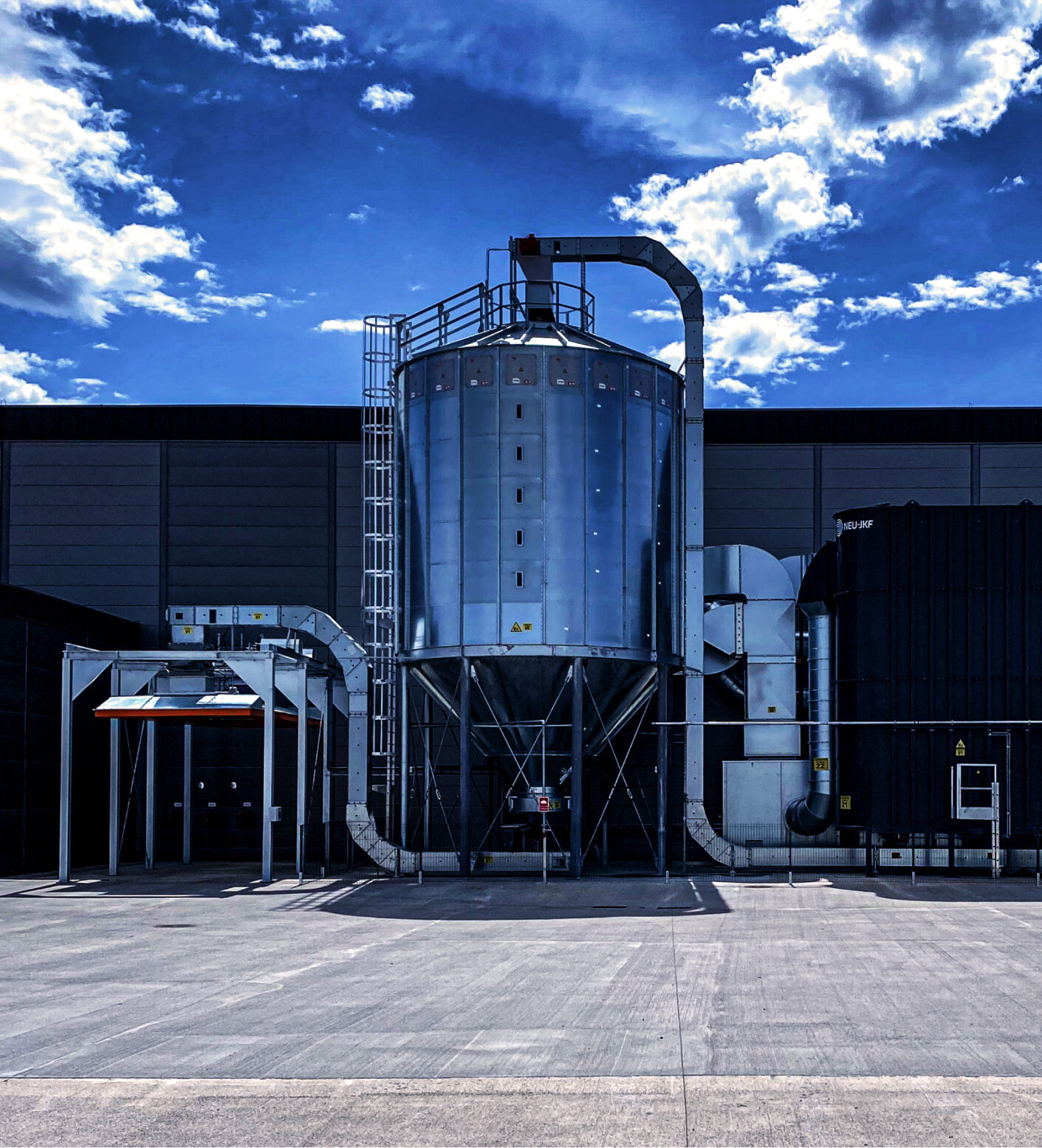
DEDUSTING

NEU-JKF – your partner in developing state-of-the-art air dust extraction systems
Today’s industrial plants produce a lot of dust and pollutants that can deteriorate air quality, affect the health of workers and reduce the efficiency of machinery. That’s why dust extraction systems have become an essential part of modern production processes. Thanks to them, you will not only reduce emissions of pollutants into the environment, but also optimize the operating costs of your plant. This is a step towards a healthier and more efficient workplace.
What are dust extraction systems?
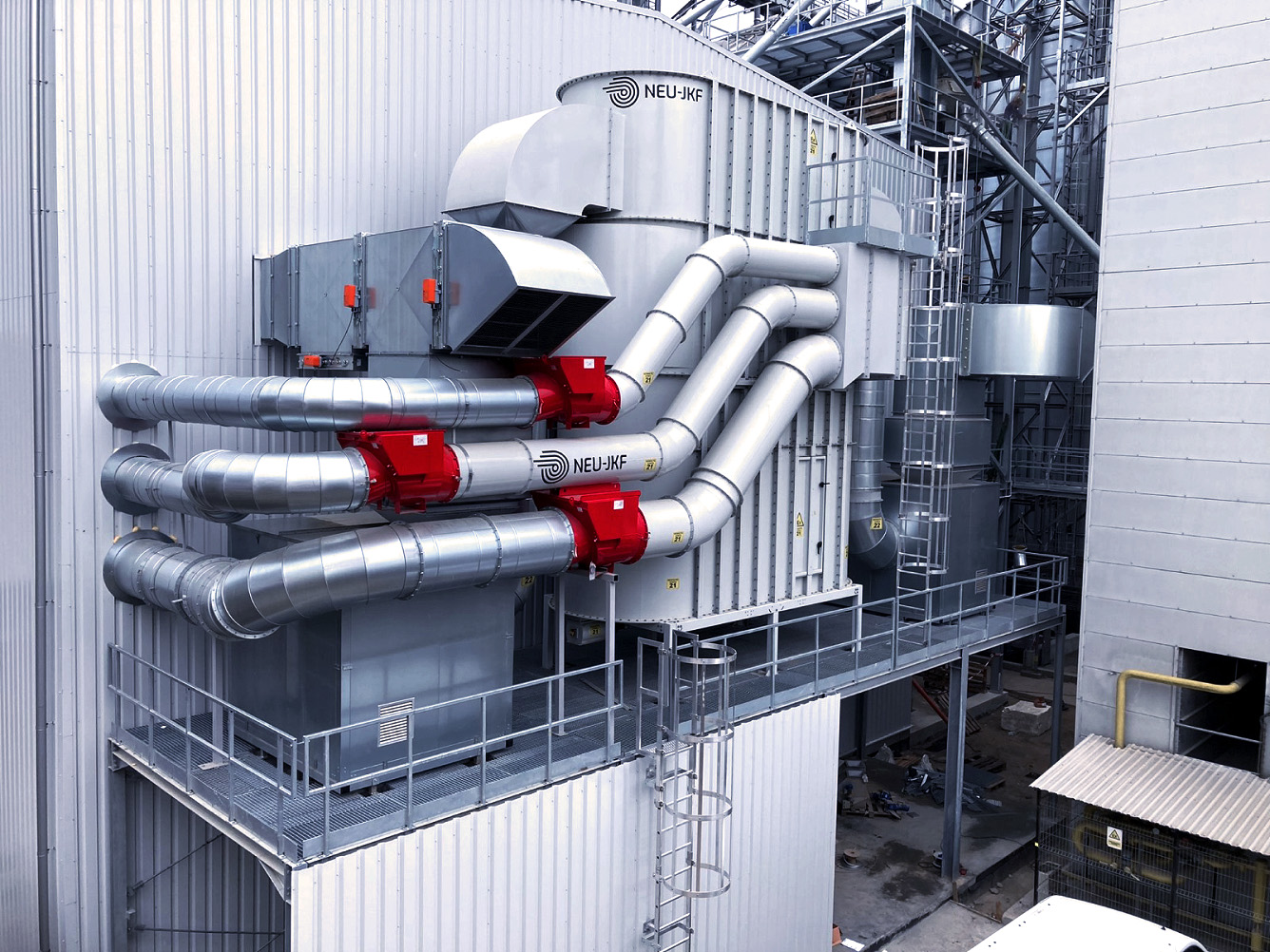
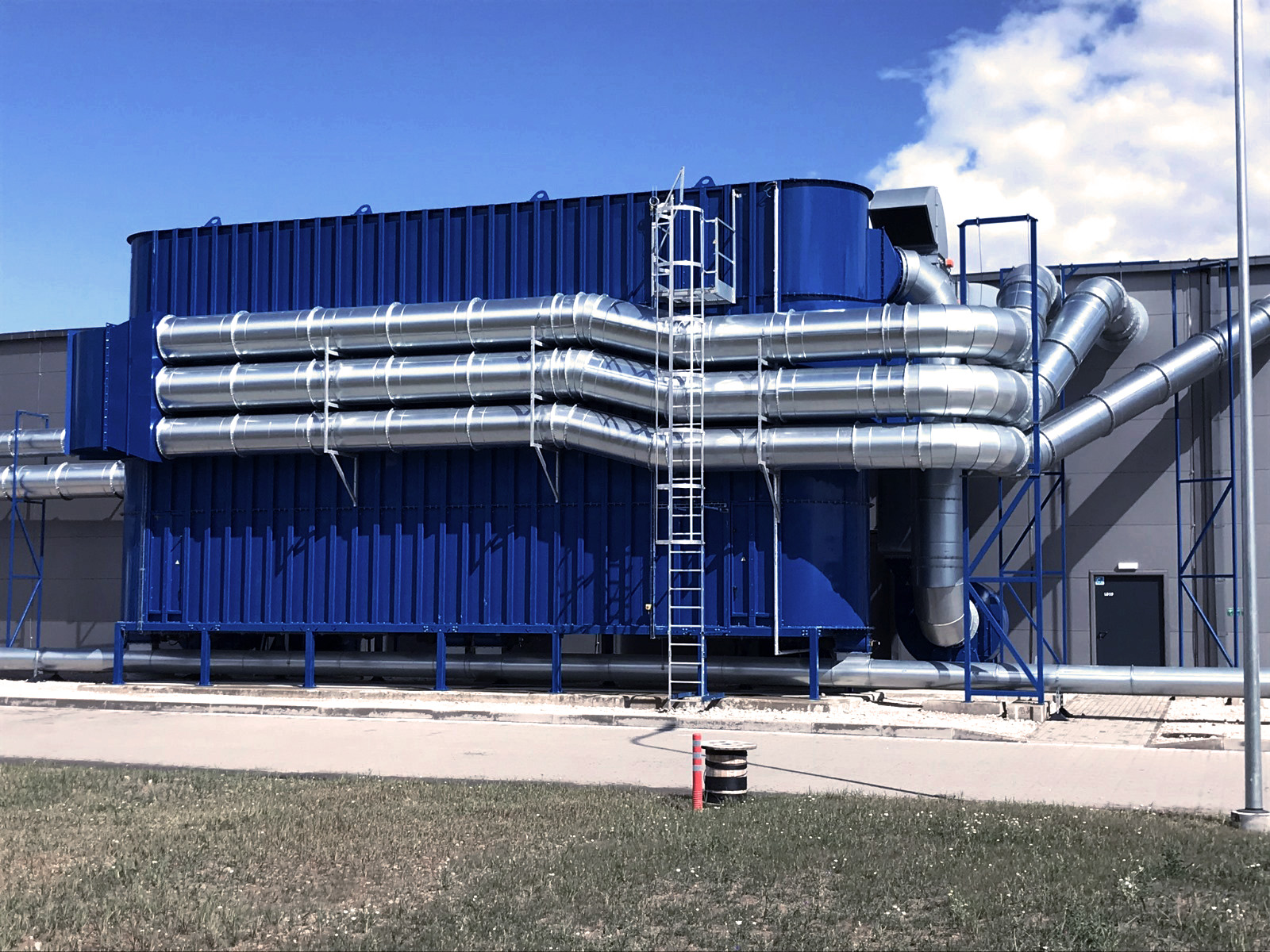
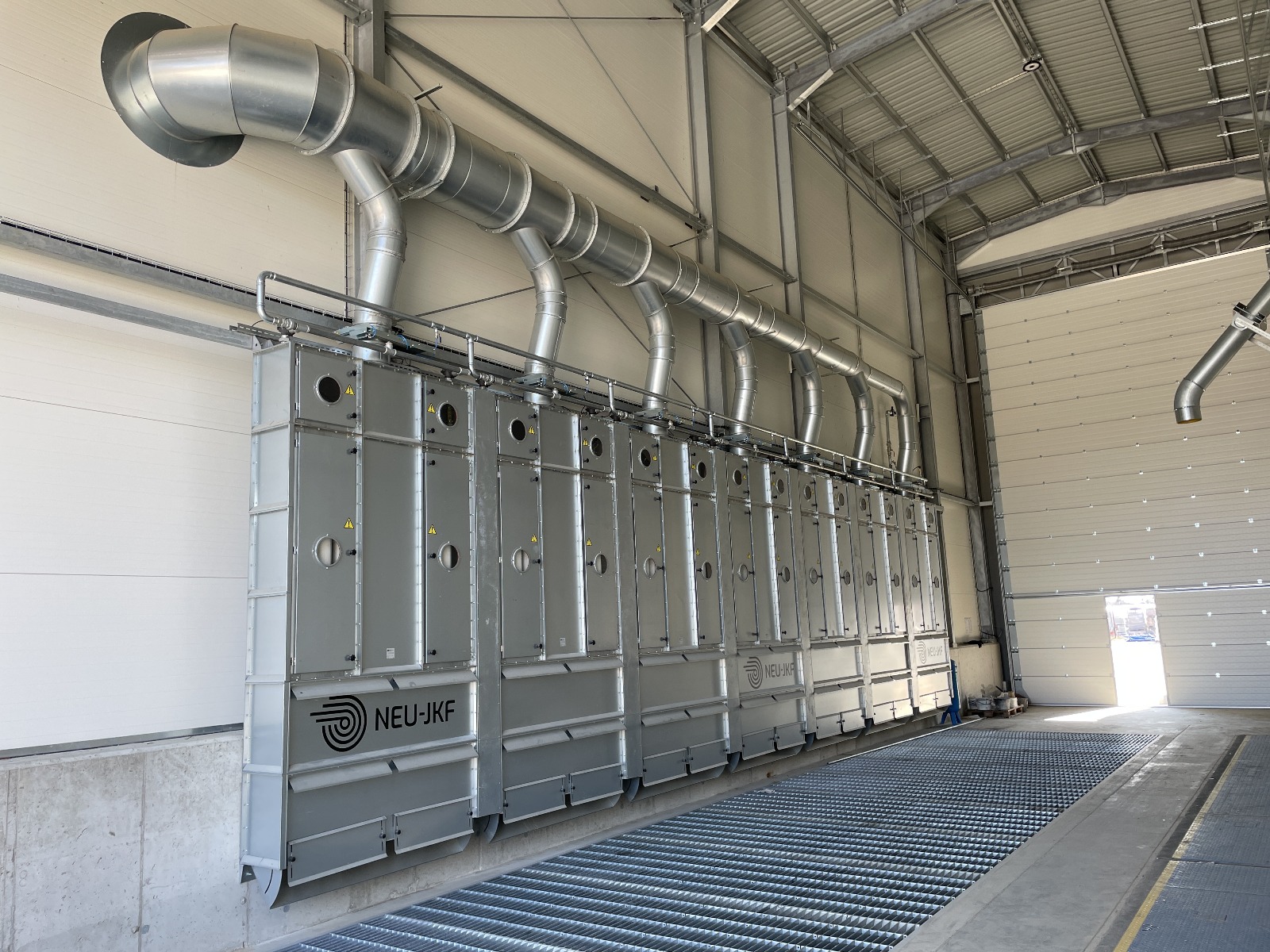
Dust extraction systems are modern technological systems for the effective removal of dust and particulates from the air generated during various industrial processes. Their main task is to dedust the air both inside production halls and outside, contributing to improved working conditions and environmental protection. Dust collection systems are indispensable wherever harmful pollutants are generated that can negatively affect human health, equipment performance and compliance with legal emission standards.
Dust extraction systems are widely used in many industries where production processes generate large quantities of pollutants. Examples of applications include:

Woodworking industry
Removal of sawdust, wood dust and varnish particles

Metallurgy
Elimination of metal dust and toxic fumes

Chemical Industry
Transport and neutralization of dust and chemicals with potentially harmful effects

Paper industry
Elimination of cellulose dust and particles generated during paper cutting and processing processes

Grain and milling industry
Removal of grain dust, flour dust and particles generated in milling and transport processes

Recycling
Cleaning the air of dust generated during the processing of materials such as plastic, paper and metals.
Key components of a dust extraction system – how does the air purification system work?
Each dust extraction system consists of several key components that together form an efficient air purification system:
⦁ Dust extraction equipment – Responsible for separating dust and pollutants from the air, using a variety of technologies such as bag filters, cyclones and scrubbers.
⦁ Transmission ducts – Transport contaminated air to the dust collection equipment and then discharge the cleaned air.
⦁ Filter media – Clean the air of the finest dust particles, ensuring maximum purity.
⦁ Fans – Responsible for forcing air through the dust extraction system to ensure process efficiency.
⦁ Piping systems – Allow you to monitor and control the operation of the system, adapting it to your specific operating conditions.
Particulate matter separation
The dust extraction process begins with the separation of particulate matter from the air or gases transporting the pollutants. To do this, a variety of technologies are used to effectively capture dust while allowing the cleaned air to flow freely.
One of the primary methods is mechanical separation, which uses centrifugal force in special devices such as cyclones to separate heavier particles from the air stream.
Filtration is a key step in the operation of dust extraction systems. Mechanical filtration, in which dust is trapped by special filter fabrics, allows the air to be effectively cleaned of smaller particles. By combining these technologies, dust collection systems can be precisely tailored to the specific needs of an industrial plant.
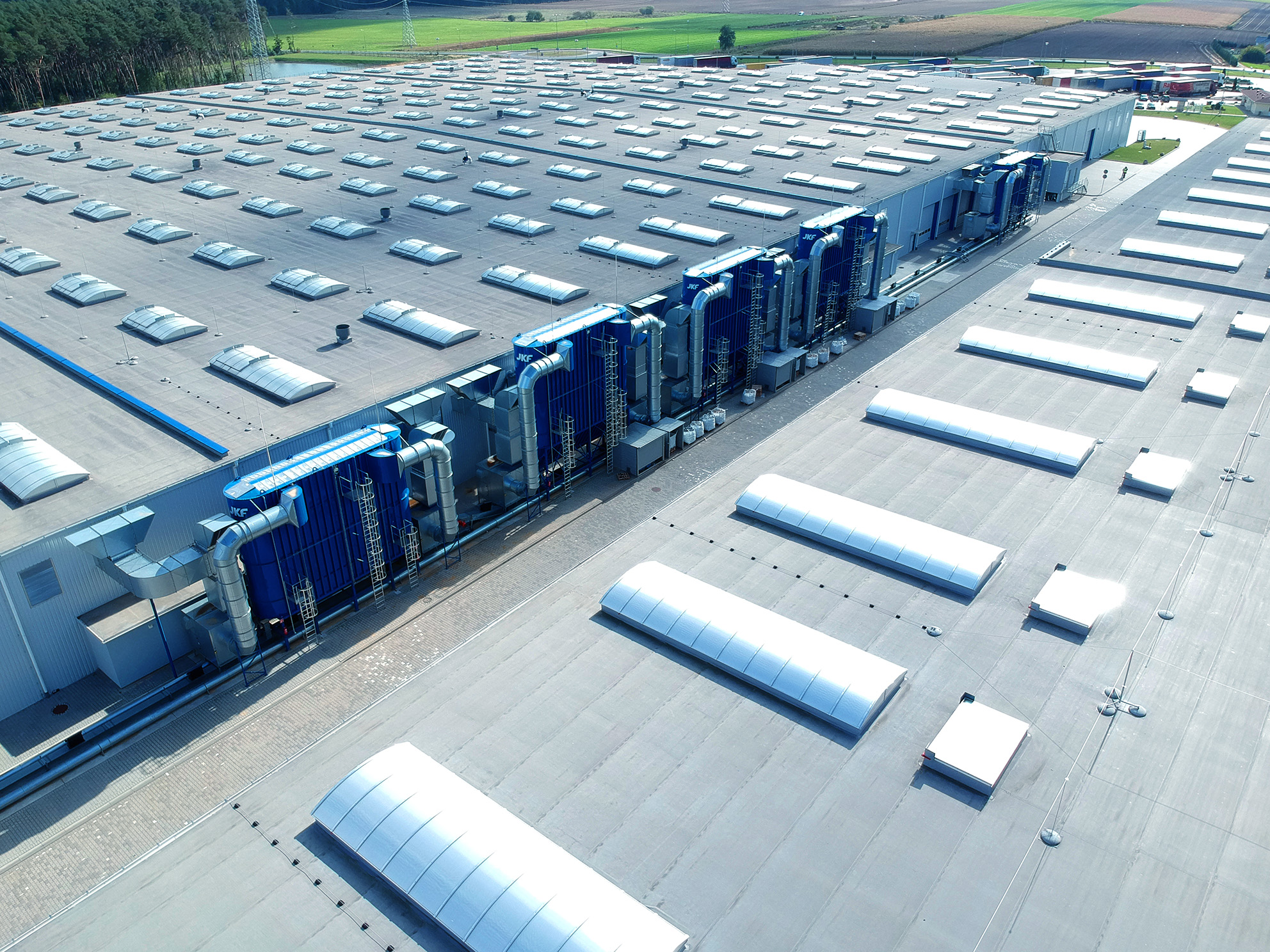
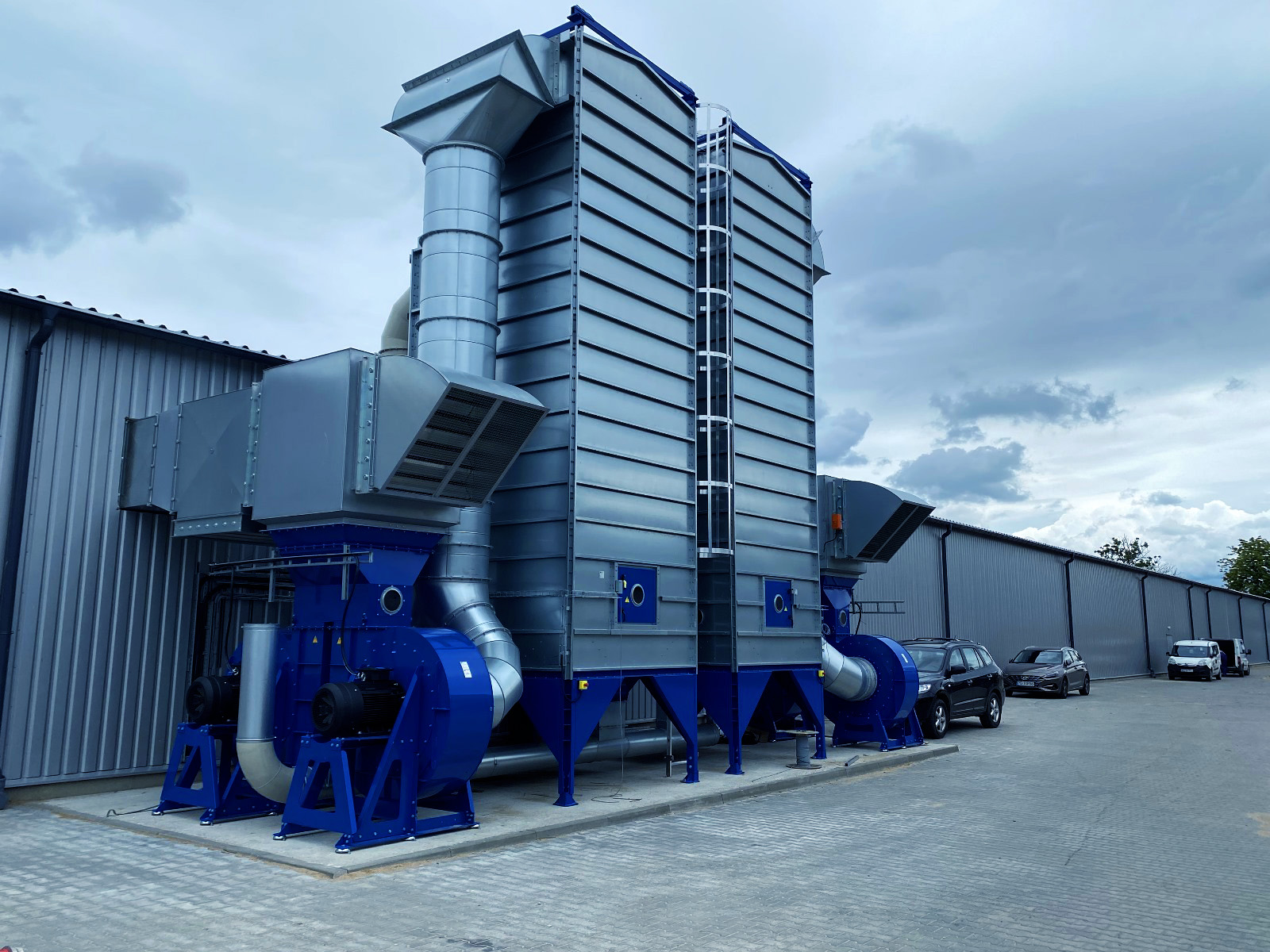
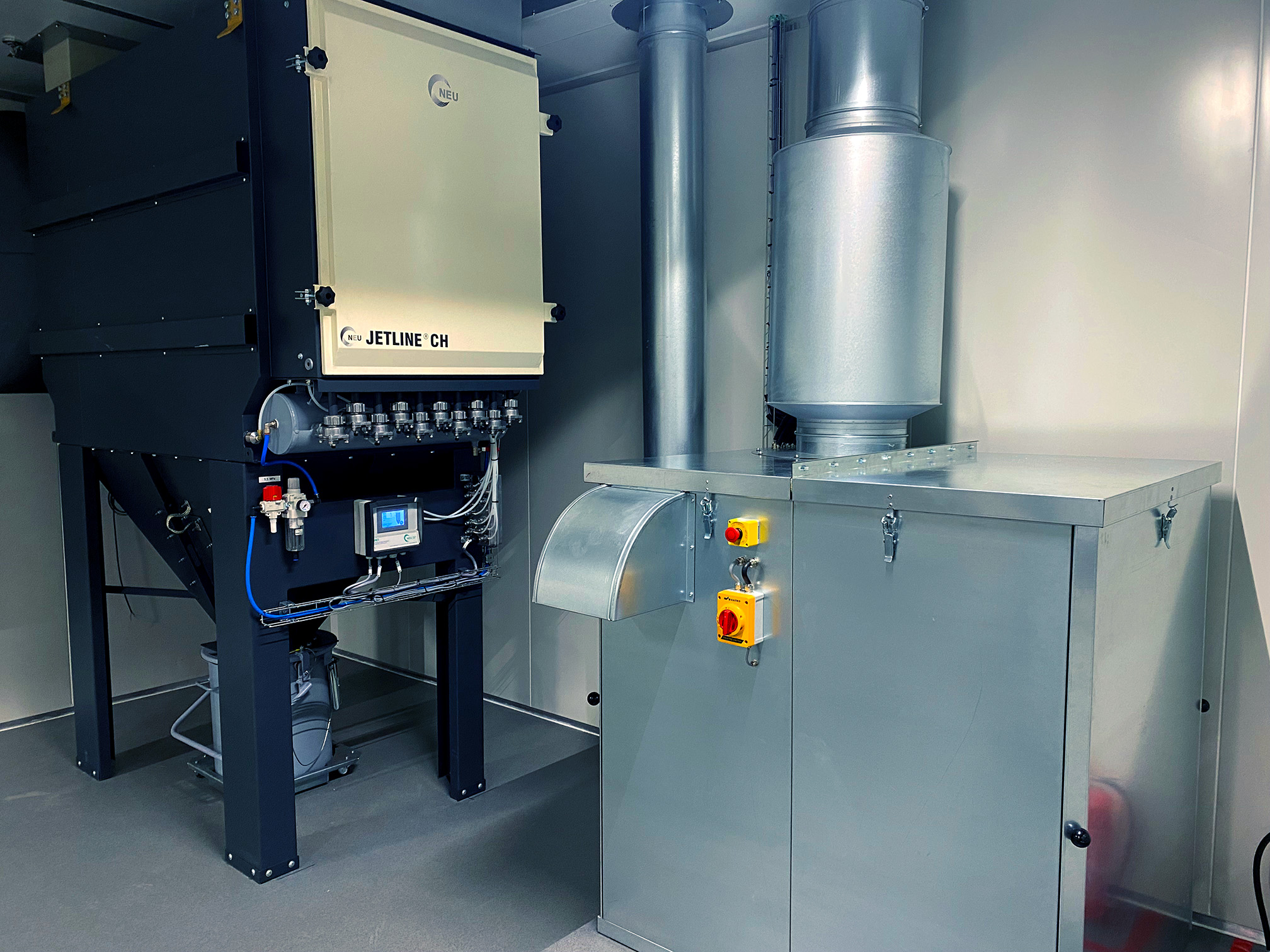
Industrial air dust extraction – in line with sustainability policy
The use of dust extraction systems brings a number of benefits that significantly affect the operation of industrial plants. First of all, air dedusting allows for effective removal of harmful dust and particles, which directly translates into improved working conditions. Clean air in production halls is not only a matter of workers’ comfort, but first of all their safety and health protection. Minimizing exposure to dust prevents the development of many occupational diseases, such as respiratory diseases, which can be caused by prolonged contact with pollutants.
Dust extraction is also crucial for the environment. By reducing atmospheric dust emissions, production facilities can operate in accordance with current environmental standards, reducing their negative impact on the environment. Dust extraction systems make it possible to control and reduce pollution, which is not only a legal requirement, but also a sign of environmental responsibility.
Dust extraction systems also improve the efficiency of technological processes. Dedusting reduces the risk of machine failures caused by dust deposition on their components, which extends the life of equipment and reduces maintenance costs. In addition, maintaining a clean working environment allows production lines to operate more precisely and efficiently, resulting in increased product quality and optimized production costs.
Invest in clean air, efficient production and sustainable development
NEU-JKF has been providing comprehensive dust extraction system solutions for years, helping companies in various industries effectively eliminate air pollutants from industrial processes. Thanks to our knowledge and experience, we are able to create effective dust extraction systems that not only improve air quality, but also support the optimization of technological processes in production plants.
We carry out each project with the utmost precision, making sure that the delivered installations ensure operational safety, longer equipment life and reduction of dust emissions into the environment. We build the trust of our customers through a combination of modern technologies, professional advice and comprehensive technical support at every stage of implementation.
Do you have any questions? Use our contact form!
Choose the right section, ask a question and get an expert answer – all with one form!