
WOOD INDUSTRY

The wood industry, as one of the key industrial sectors, presents unique challenges related to dust control and ventilation. Icon

The wood industry, as one of the key industrial sectors, presents unique challenges related to dust control and ventilation.

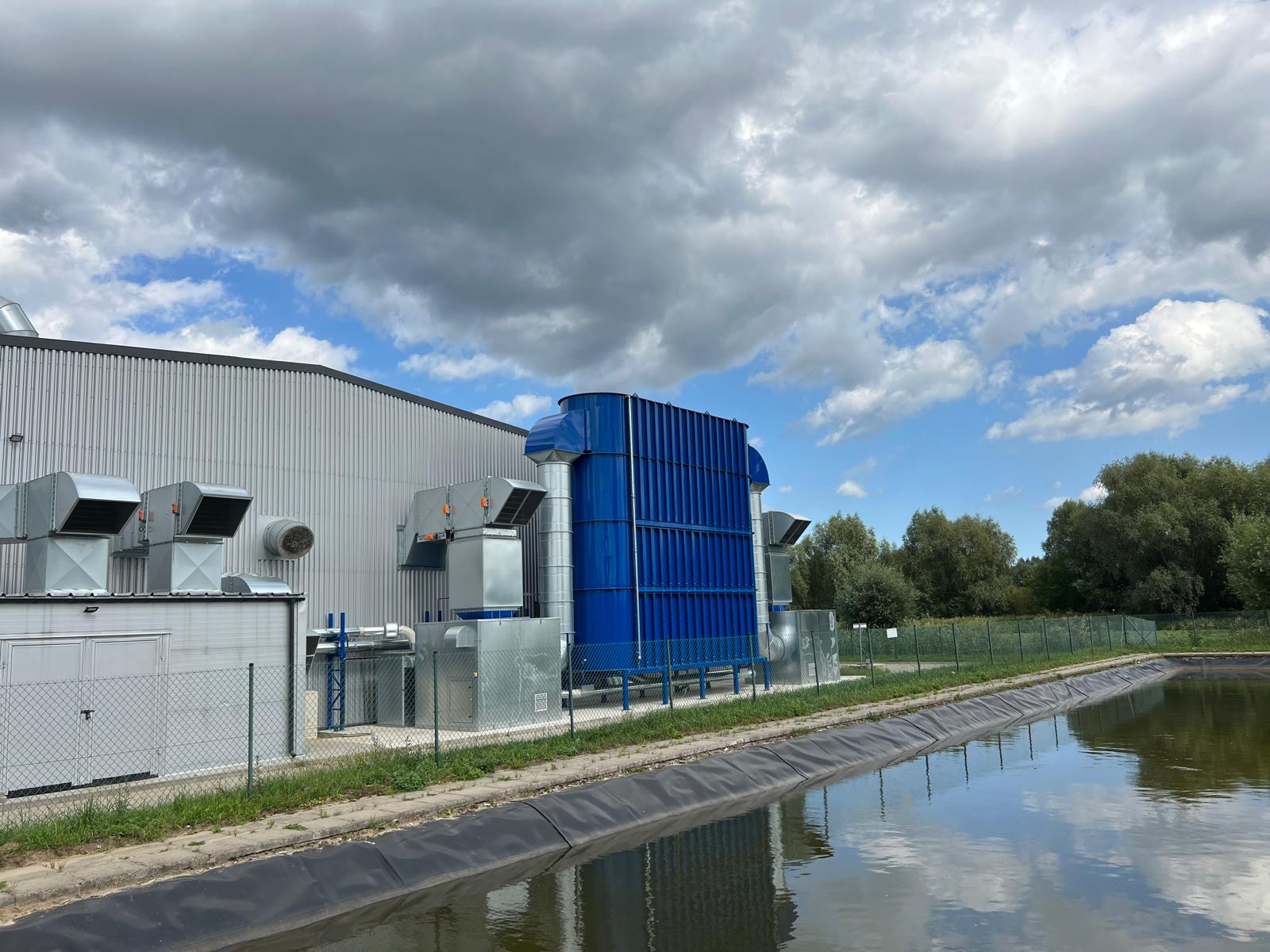
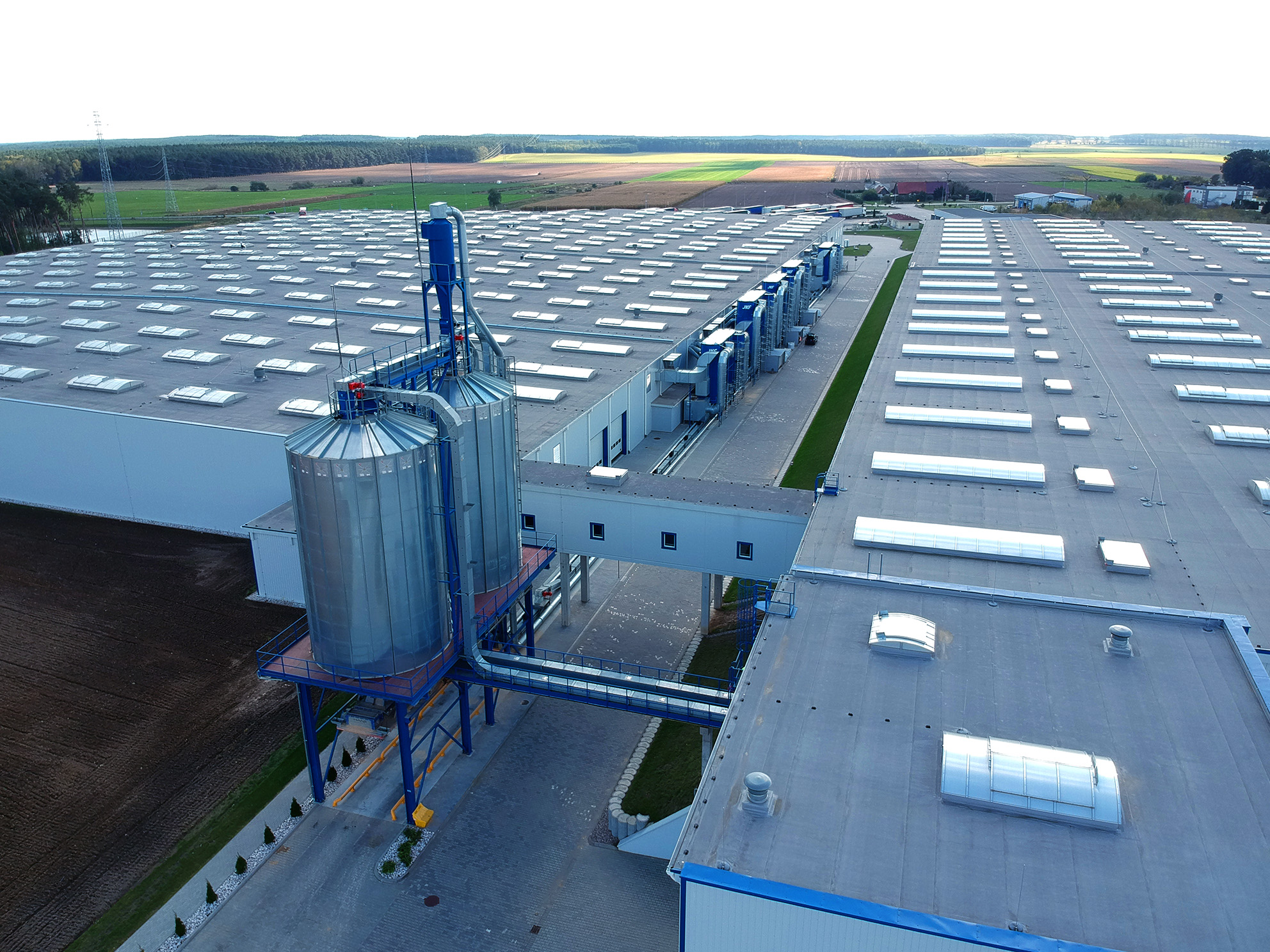
Our systems are designed to meet a wide range of needs—from small woodworking shops to large-scale international furniture manufacturers.

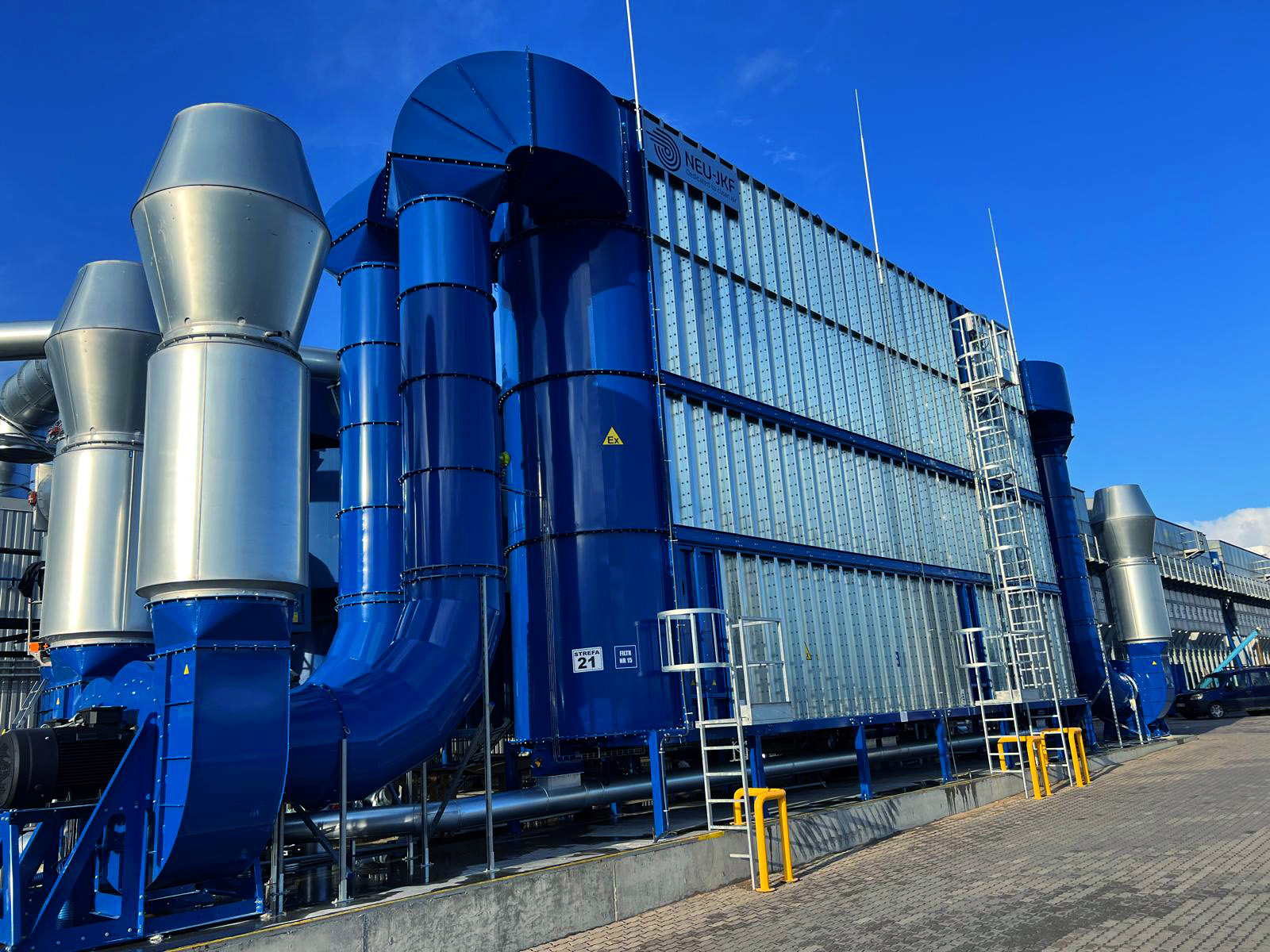
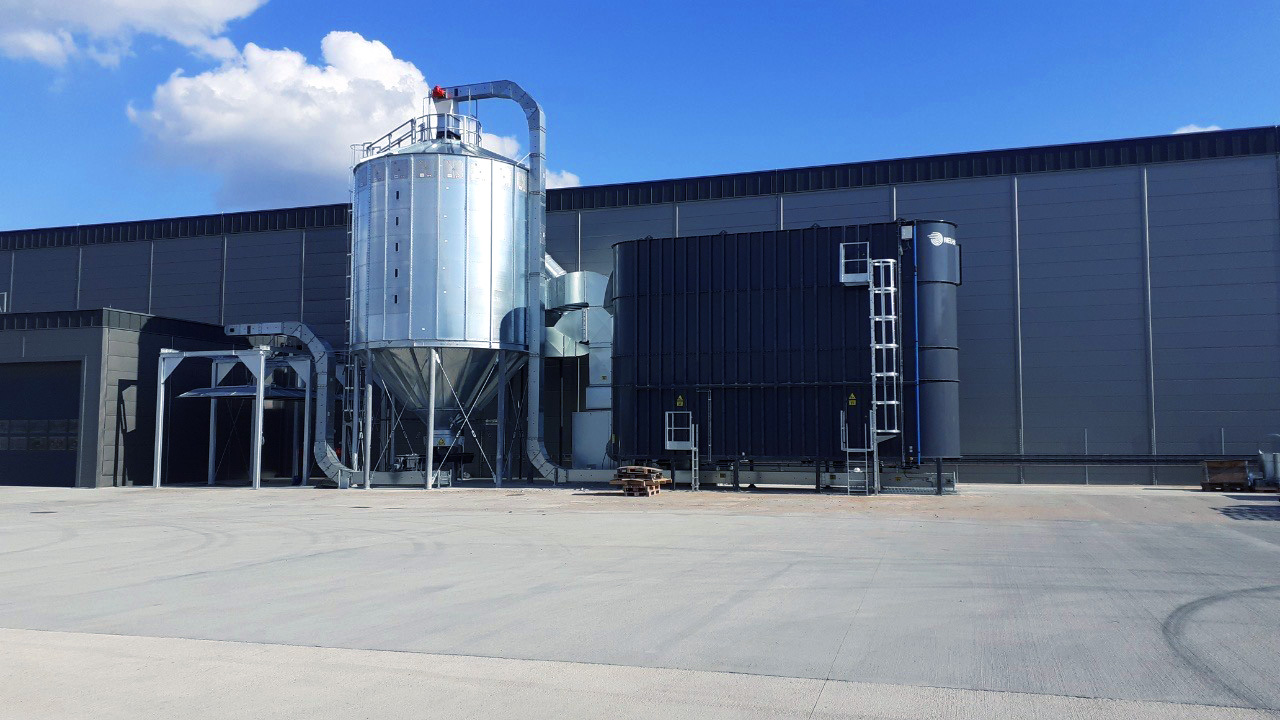
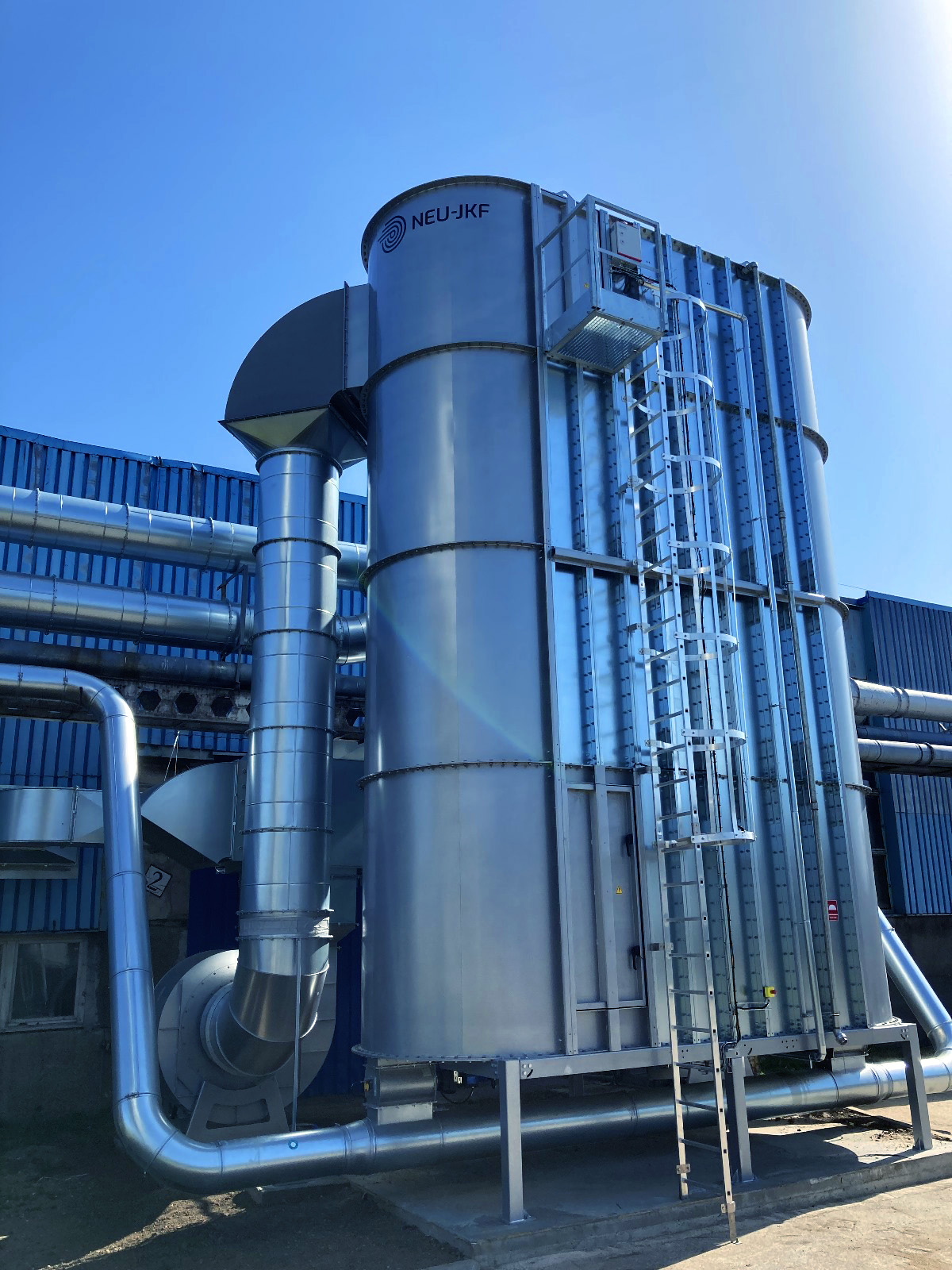
The woodworking industry requires efficient and safe removal of dust, sawdust, and wood chips generated during wood processing. At NEU-JKF, we design complete dust extraction and material handling systems for woodworking shops, sawmills, furniture factories, and other manufacturing facilities, taking into account the type of machinery, the nature of the contaminants, and the workflow.
Drawing on the JKF Group’s more than 50 years of experience, NEU-JKF provides comprehensive and cutting-edge technological solutions that raise standards in the workplace, productivity, and safety.
Thanks to our in-depth knowledge of the specific requirements of the wood industry, we offer top-of-the-line filters, cyclones, stainless steel piping systems, fans, airlocks, and accessories that ensure:
⦁ Effective purification of air from wood dust,
⦁ Protection of workers’ health by reducing emissions of harmful particles,
⦁ Extended machine service life and reduced production downtime.
A picture in the gallery

Working with us guarantees reliable dust collection systems that raise standards in the wood industry, helping to build a safer, more environmentally friendly, and more efficient future.

Contact us to find out what we can offer your company.
A picture in the gallery
A picture in the gallery A picture in the gallery A picture in the gallery A picture in the gallery A picture in the gallery A picture in the gallery

Where is wood dust produced, and what factors determine its properties?

Wood dust does not have fixed characteristics. Its quantity, particle size, and behavior vary depending on the type of material being processed, the machine used, and the production setup. Therefore, two wood-processing plants can generate completely different pollutant streams, even when they process similar raw materials.

How do cutting, milling, and sanding affect wood dust?

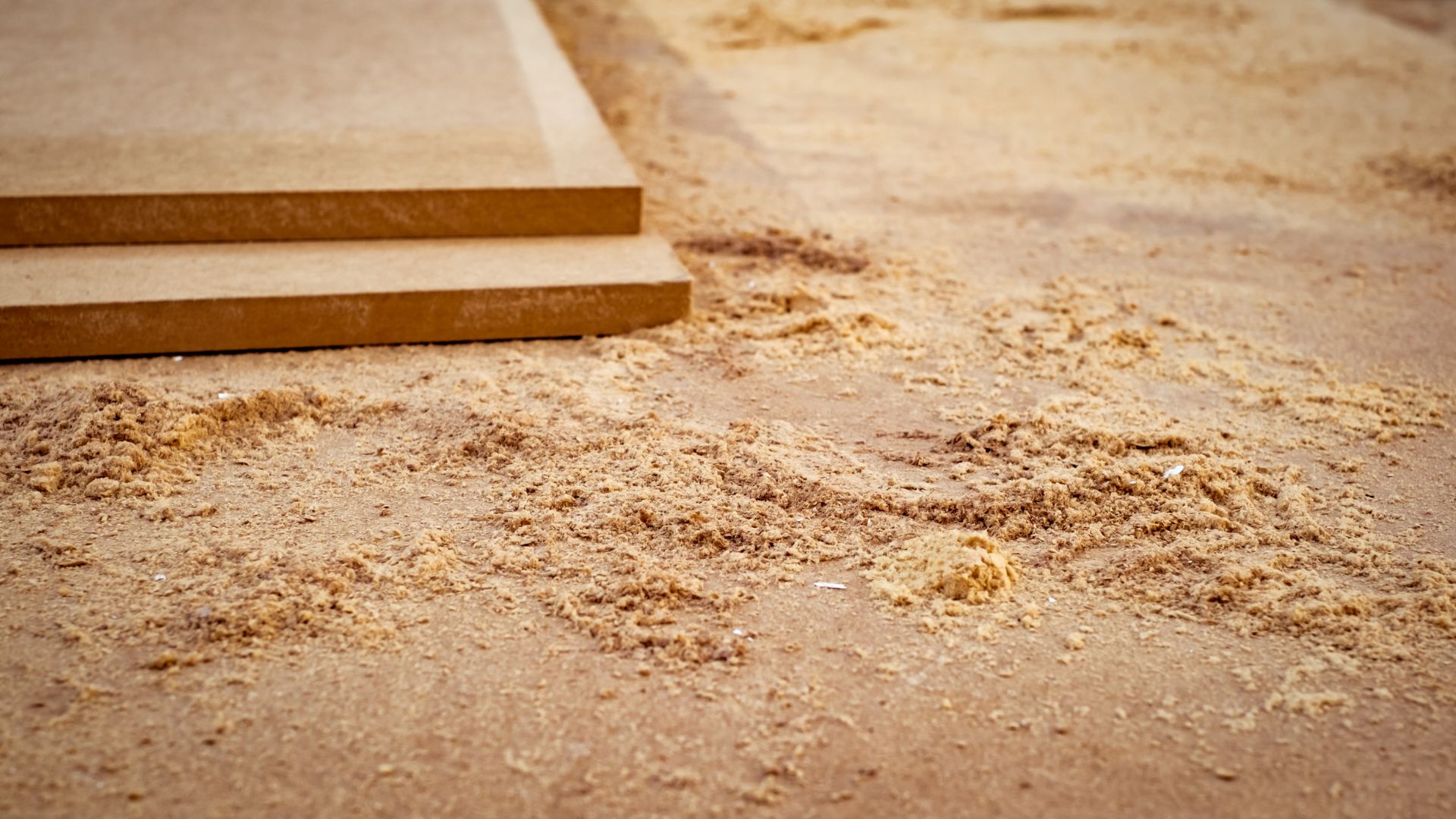
Each machining process produces a different mixture of dust and larger particles. Cutting and milling produce both fine particles and heavier chips. Sanding primarily generates light wood dust, which easily becomes airborne and places a heavier load on the filter media.
The properties of the material are also important. Moist or resinous particles adhere more easily to system components and can make it more difficult to clean the filters. Dry material behaves differently, so system parameters should not be selected based solely on the volume of wood being processed.

A picture in the gallery

How do dust sources in a carpentry shop and a sawmill differ?

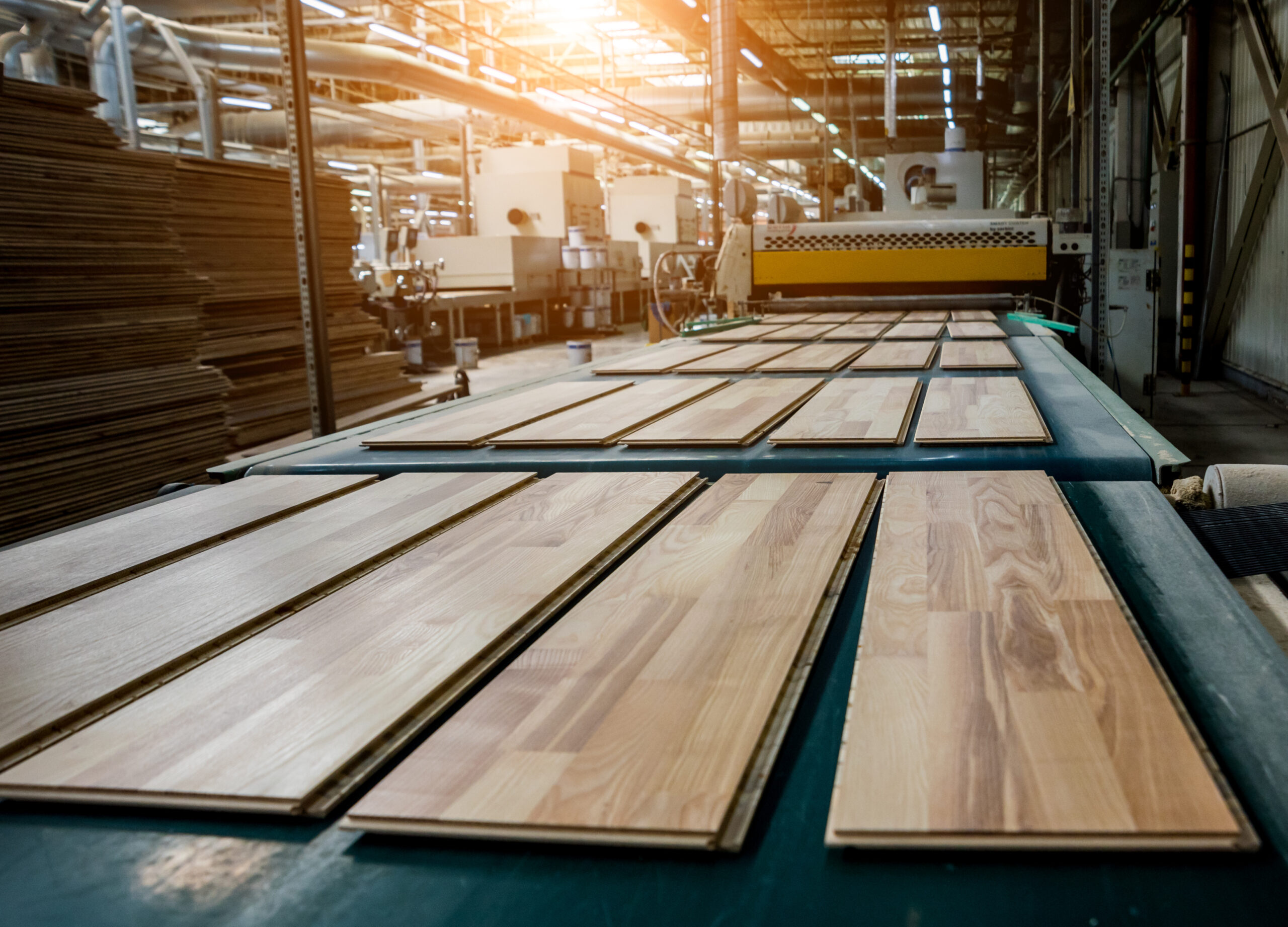
In a woodworking shop, wood dust is typically generated at many scattered locations. Machines operate on variable cycles, and the type of operations performed can change even within a single shift. Many sawmills have higher material flow rates and a higher proportion of heavier chips than typical woodworking shops. Under such conditions, it is essential to efficiently separate larger particles and route the ducts so that material is transported without causing blockages.

How does wood dust affect workers’ health?

Wood dust becomes a hazard when particles generated during cutting, milling, planing, or sanding become airborne and enter the respiratory tract. Their size, concentration, and duration of exposure are all important factors. Eye or nose irritation may be the first sign of a problem, but the effects of long-term exposure can be much more serious.

What health problems can wood dust cause?

Workers exposed to wood dust may experience coughing, rhinitis, breathing difficulties, and allergic reactions. The risk increases when pollutants remain in the air for a long time or regularly spread beyond the area where they are generated.
Operations that generate large amounts of fine particles require special monitoring. This applies primarily to grinding, sawing, and other high-speed machining processes. Invisible particles may still remain in the breathing zone, so a visual assessment of the workshop’s cleanliness alone is not sufficient to determine the level of exposure.

How does wood dust affect production safety?

Wood dust that accumulates on machinery, structures, and inside systems increases the risk of ignition and makes it difficult to maintain stable production conditions. Contaminants accumulated in hard-to-reach areas prolong cleaning, complicate inspections, and can lead to unplanned line downtime. The problem, therefore, goes beyond a dirty production floor. The method used to capture, transport, and store dust directly affects the safety of the entire process.

A picture in the gallery

When does wood dust pose a fire or explosion hazard?

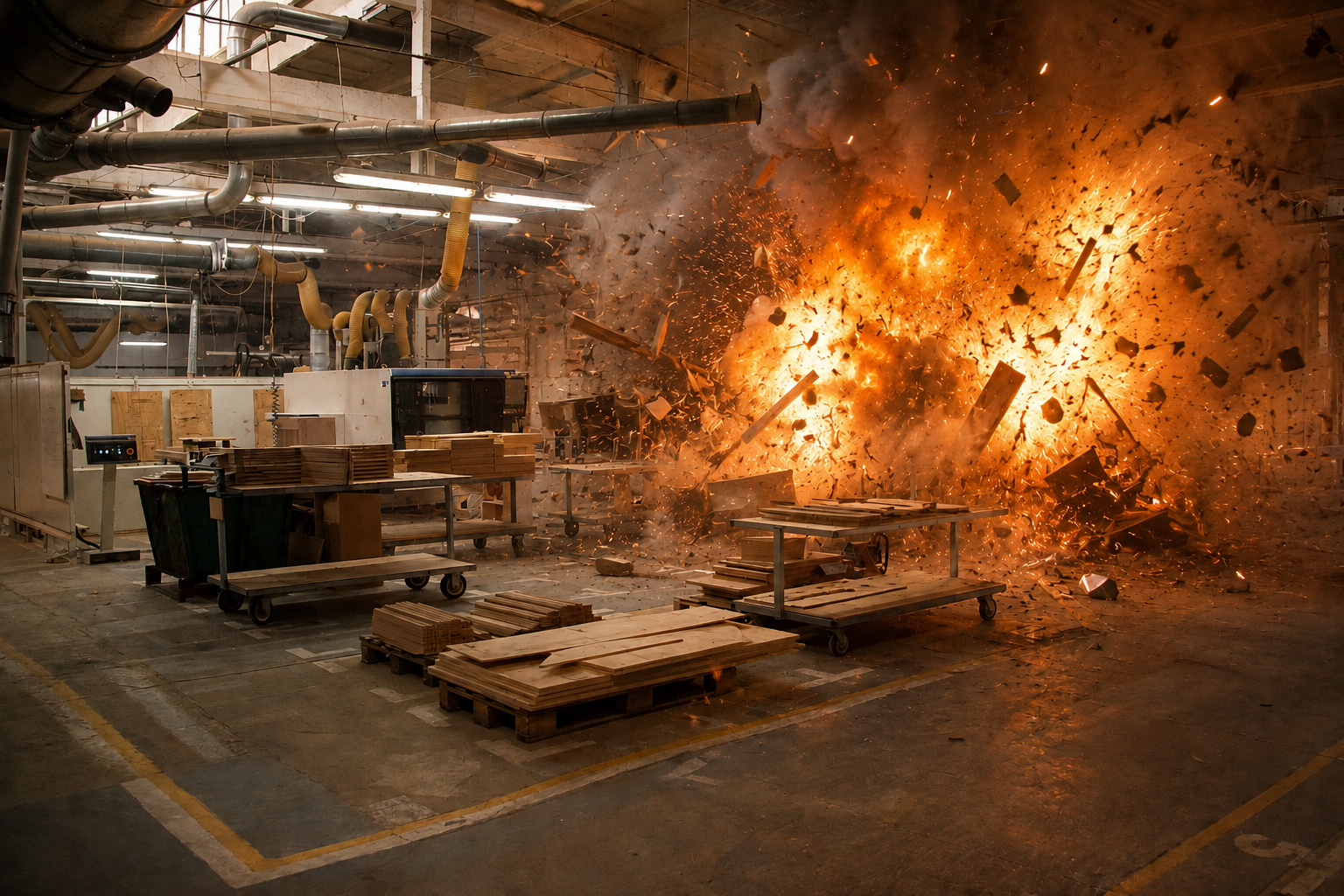
A layer of dust can ignite upon contact with a hot surface, a spark, or an overheated machine part. Another scenario occurs when fine wood dust is suspended in the air and forms a mixture capable of rapid combustion. Enclosed system components, such as ducts, filters, separators, and tanks, require special attention.

How do dust deposits affect operational continuity?

Wood dust that accumulates inside the ducts can reduce their cross-sectional area and alter flow conditions. The system then ceases to operate as intended, even if the individual components remain functional. Additional work is required during inspections and troubleshooting. Contaminated components require more time to prepare for service, and accumulated material can make it difficult to safely access the site of the malfunction.
Regular inspection of deposits helps identify such problems before they affect production rates.

How can we reduce the risks associated with wood dust?

Key factors include the routing of the ducts, the location of the equipment, the method of material separation, and the conditions for its subsequent transport and storage.
At NEU-JKF, we analyze the entire technological process to tailor the wood dust collection system to the actual conditions of the facility. Safety measures must minimize risk, but they must not disrupt the flow or hinder system operation. Their placement and specifications should be based on an assessment of the specific installation, rather than a one-size-fits-all approach.

A picture in the gallery

How can you reduce wood dust and protect the production line?

Wood dust must be captured by the system, transported, separated from the air, and directed to the collection point. If even one component is not properly matched, it can reduce the efficiency of the entire system, even if the other devices have the correct specifications.

What components make up a wood dust protection system?

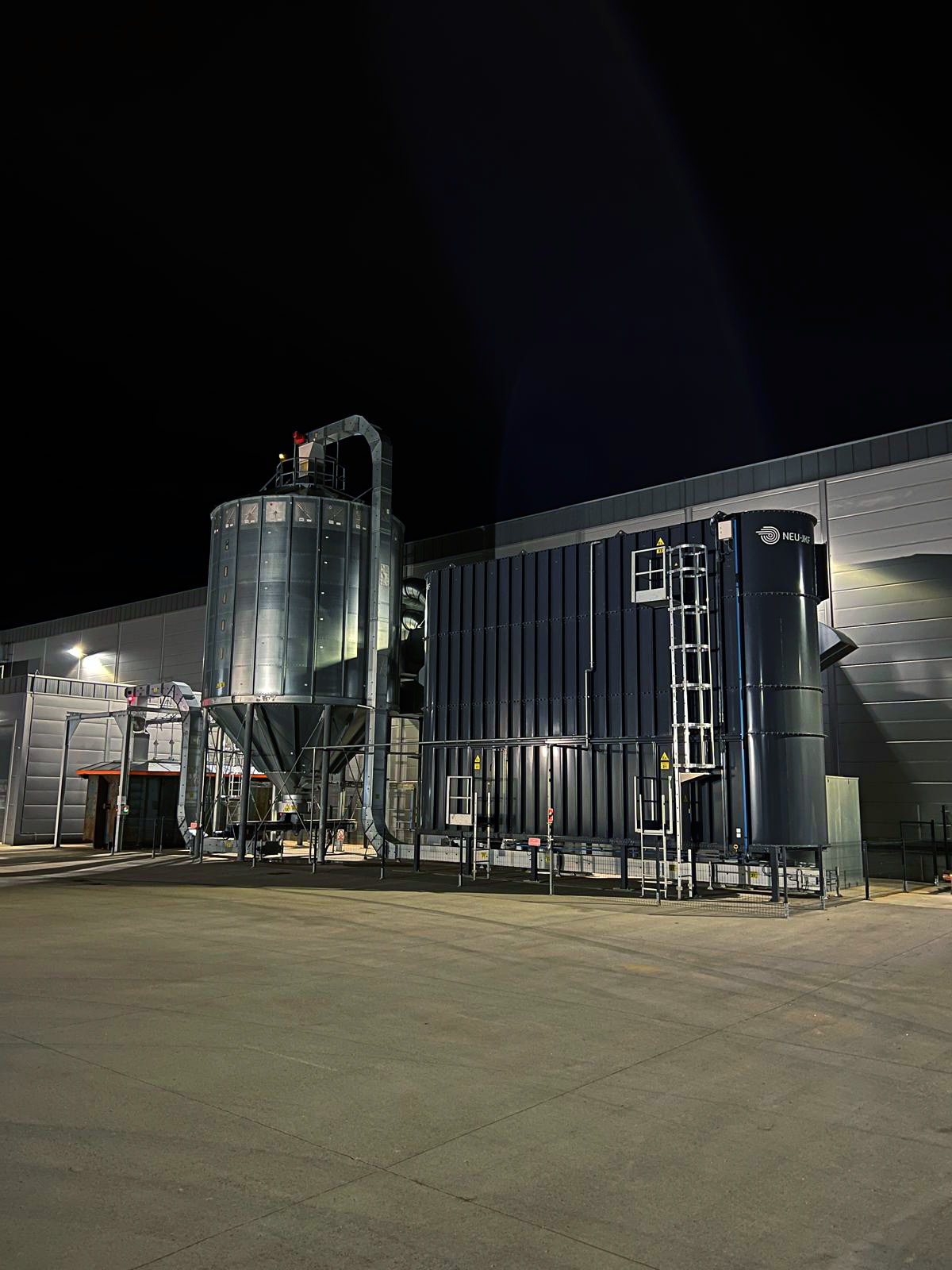
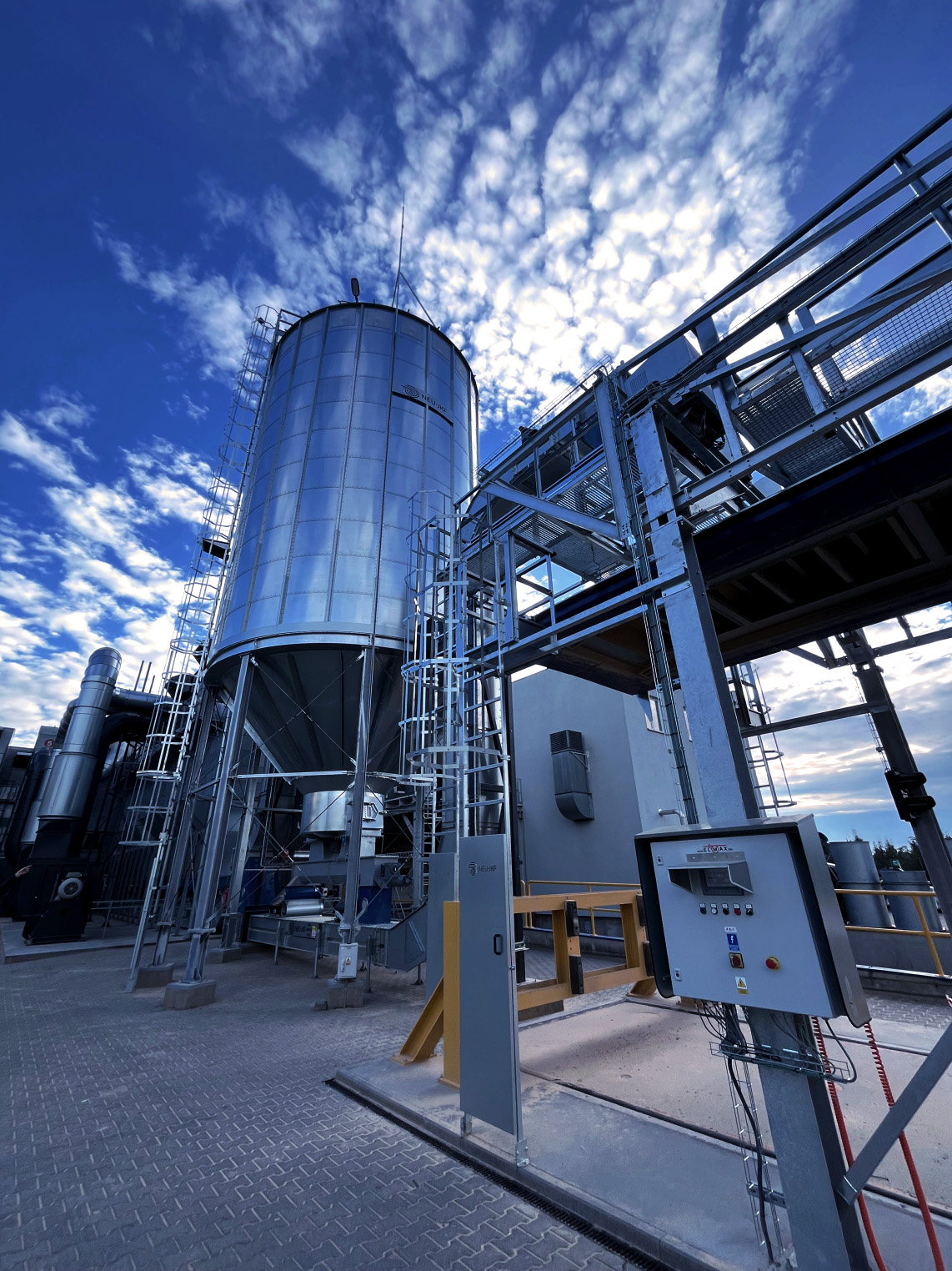
The system may include machine connections, a network of pipes, fans, cyclones, filters, and equipment that transfers the separated material to a hopper or silo. Their configuration depends on the type of production and how sawdust, wood chips, and fine particles are handled. A well-designed dust collection system forms a single, cohesive unit. As a result, dust does not accumulate between successive stages of the installation.

Wood dust under control at every stage of production

Effectively reducing wood dust requires viewing the facility as a single process. What matters are not only the equipment’s specifications, but also how the components work together, how the system is controlled, and the ability to adapt it to future changes in production. A well-prepared design helps avoid ad-hoc solutions and creates the conditions for stable plant operation. Our solutions for the wood industry can include filters and cyclones, fans, piping systems, airlocks and separators, ATEX-compliant solutions, mechanical and pneumatic conveying systems, silos, loading systems, as well as plant control and monitoring.
Are you planning a new investment or an upgrade to an existing system? Contact NEU-JKF. We’ll analyze your plant’s needs and select a solution tailored to your technological process and production development plans.

FAQ

Does NEU-JKF carry out installations only for large factories?

Expand column icon Collapse column icon
No, we can provide solutions for both smaller woodworking shops and large-scale production facilities.

Does NEU-JKF supply only equipment?

Expand column icon Collapse column icon
No, working with us can include design, component manufacturing, delivery, installation, and commissioning of the system. This ensures that responsibility for the various stages is not spread across multiple contractors.

Can the investment be divided into several phases?

Expand column icon Collapse column icon
We evaluate the feasibility of phasing the investment on a case-by-case basis during the conceptual design phase. This depends, among other factors, on the system architecture, the order in which areas are launched, and the preparation of points for future expansion.

Does NEU-JKF provide support after the system is up and running?

Expand column icon Collapse column icon
Yes, we provide maintenance services for the solutions we deliver. The scope of support is determined based on the facility’s equipment and operating conditions.

Can a stainless steel piping system be used in a wood processing plant?

Expand column icon Collapse column icon
Yes, we offer piping systems made of stainless steel. We select the material based on the operating environment, the type of material being transported, and the requirements of the specific project.

NEU-JKF Sp. z o. o.

Berzyna 82

64-200 Wolsztyn

Poland

Tel: +48 68 347 07 00 info@neu-jkf.pl
Technical support Download Privacy policy
JKF Industri A/S NEU-JKF Asia Stainless