
In an era of growing environmental awareness and the global need to reduce waste, recycling plays a key role in today’s closed-loop economy. It allows reuse of raw materials, reduction of CO₂ emissions and reduction of natural resource consumption. However, behind the recycling industry’s green potential there are also significant technological challenges – one of the most important of which is dust.
Where does dust come from in recycling?
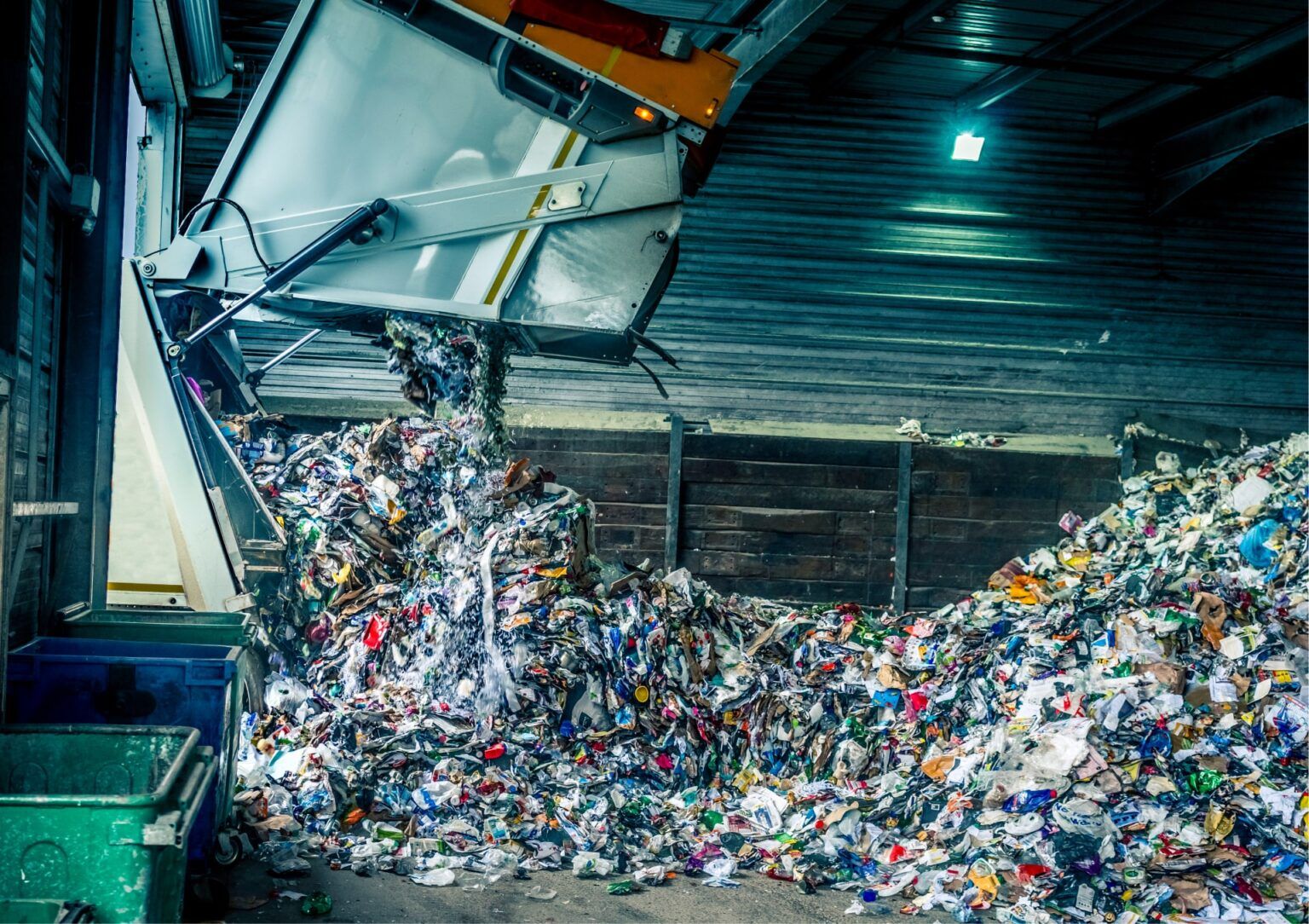
Recycling processes, regardless of the type of material being processed – plastics, paper, metals or composite materials – generate large amounts of fine particulate matter. Dust can be generated during, among other things:
– shredding and grinding of materials,
– screening and sorting of fractions,
– pneumatic or mechanical transport,
– handling and storage of raw materials and waste.
The dust created is often hygroscopic, fibrous or abrasive in nature, making it particularly difficult to capture and control.
Why is dust in recycling a serious threat?
Dust contamination affects not only the working environment, but also the very efficiency and safety of the plant:
Health hazards – prolonged exposure to dust can lead to respiratory diseases, skin irritation and allergies.
Explosion risk – many dusts of organic or synthetic origin have explosive properties. In an enclosed space, with the right concentration and ignition source, an explosion can occur.
Operational problems – settled dust damages machinery, increases the need for servicing and can cause unscheduled production downtime.
What solutions does NEU-JKF offer?
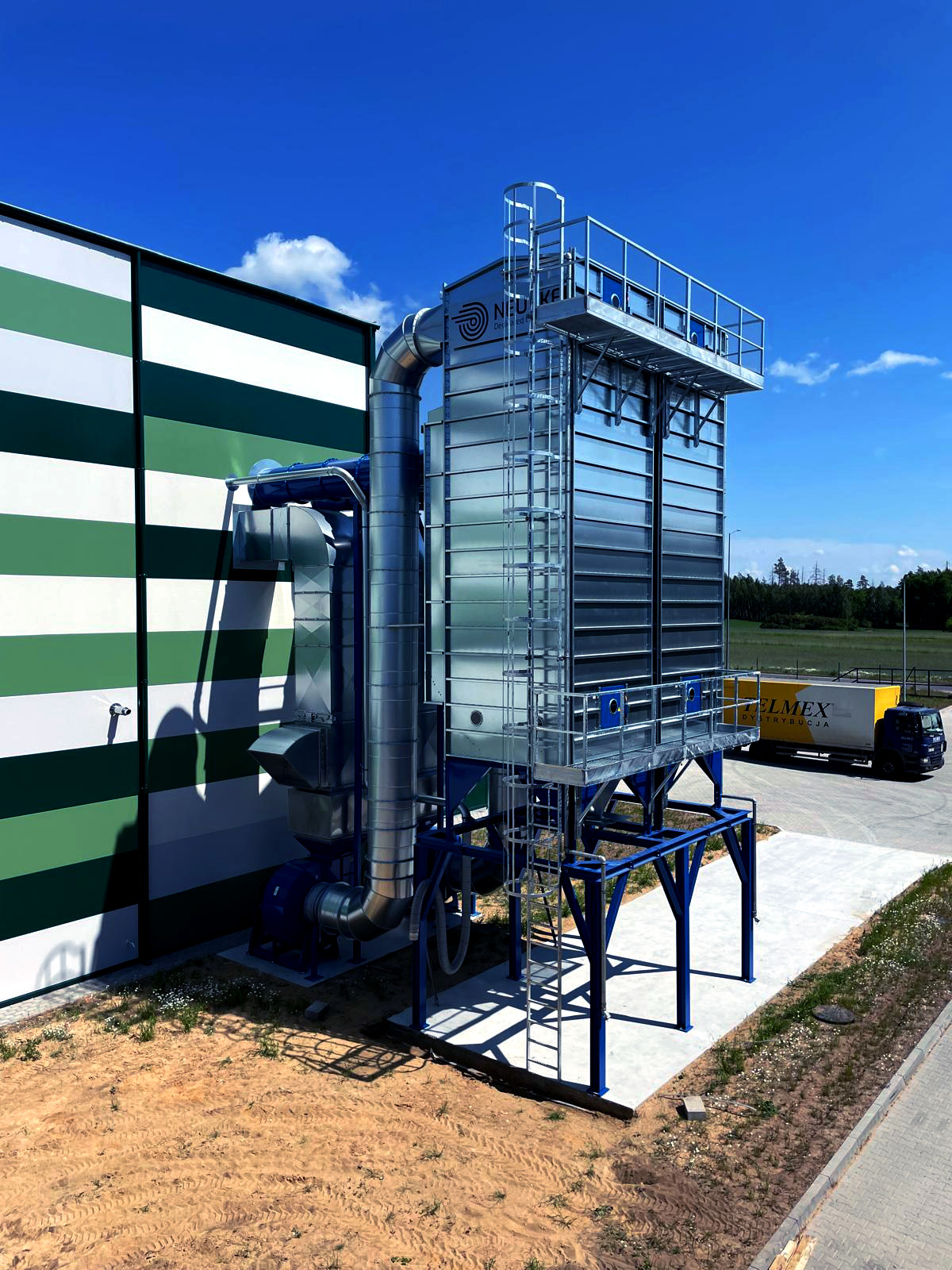
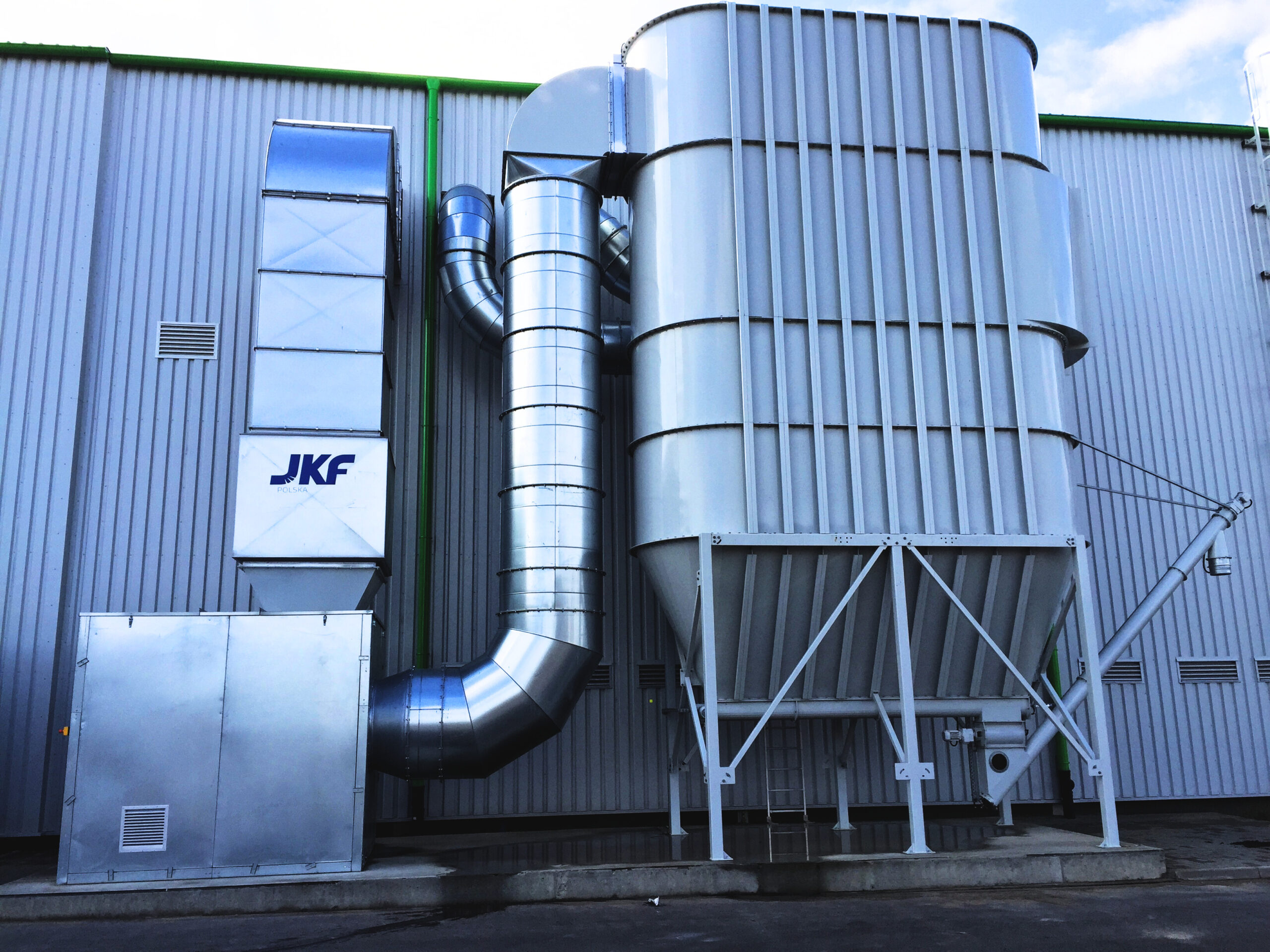
As an experienced supplier of filtration and dust collection systems, NEU-JKF provides comprehensive and effective solutions dedicated to the recycling industry.
– Bag and cartridge filters – effective in capturing both large and very fine dust particles. Using the PowerPulse® cleaning system, they provide long filter cartridge life and stable performance.
– Scrubbers (Aqualine) – ideal for removing wet, sticky and explosive dust from the air. In addition, they enable recovery of contaminated water and its reuse in the process.
– Pneumatic and mechanical conveying systems – integrated with filtration, reduce emissions during material transfer.
– ATEX-rated components – sluices, explosion-proof diaphragms and flameless VFV® relief systems that enhance the safety of installations in hazardous areas.
Recycling – clean, safe, efficient
Dust challenges in recycling require a customized approach and robust solutions. NEU-JKF supports recycling facilities in creating safe and efficient production spaces by customizing installations to meet the needs of the specific process.
Want to learn more about dedicated solutions for your recycling line?
Contact our team – we will advise and prepare an offer tailored to your needs.