

In metallurgy, where high temperatures, intensive material processing and complex chemical processes are prevalent, dust and oil mist emissions are unavoidable. Although often invisible to the naked eye, these fine particles pose a serious threat to health, equipment operability and environmental compliance.
Where does the dust come from?
Sources of dust in metallurgical plants are many and varied. The most common are:
🔹 Grinding, sandblasting, cutting and welding – these processes generate significant amounts of fine metal particles and oxides. Particularly harmful is the dust generated from stainless steel, aluminum or zinc, which can be toxic or explosive.
🔹 Melting and casting of metals – extreme temperatures result in evaporation and spreading of metal particles and chemical compounds. This phase also produces gases and oxides that condense into micro dust.
🔹 Transport and handling of bulk materials – the movement of ores, slag, metal powders and chemical additives causes dust to rise, which can get into all corners of the production hall.
🔹 Heat and surface treatment – processes such as quenching, galvanizing, anodizing or phosphating can release chemical particles and reaction dusts that become airborne and settle on equipment and installations.
Why is this a serious problem?
Dust pollution not only affects air quality – it also carries a number of serious consequences:
Explosion hazard – some metal dusts (e.g., aluminum, titanium) are flammable and explosive in air suspension. All it takes is a spark for an explosion to occur.
Toxicity of dusts – they contain heavy metals (e.g. chromium, cadmium, nickel) that can cause respiratory diseases and even cancer. Workers are exposed to their inhalation, especially in poorly ventilated halls.
Technical damage / – deposited dust causes accelerated wear of machine components, clogs filters, interferes with electronic systems and leads to the failure of entire production lines.
A threat to the environment and the company’s reputation – uncontrolled dust emissions can result in exceeding acceptable emission standards, financial penalties, loss of environmental certificates and a reputational crisis.
How to counteract?
In order to effectively minimize the impact of dust, well-considered technical and organizational measures are required:
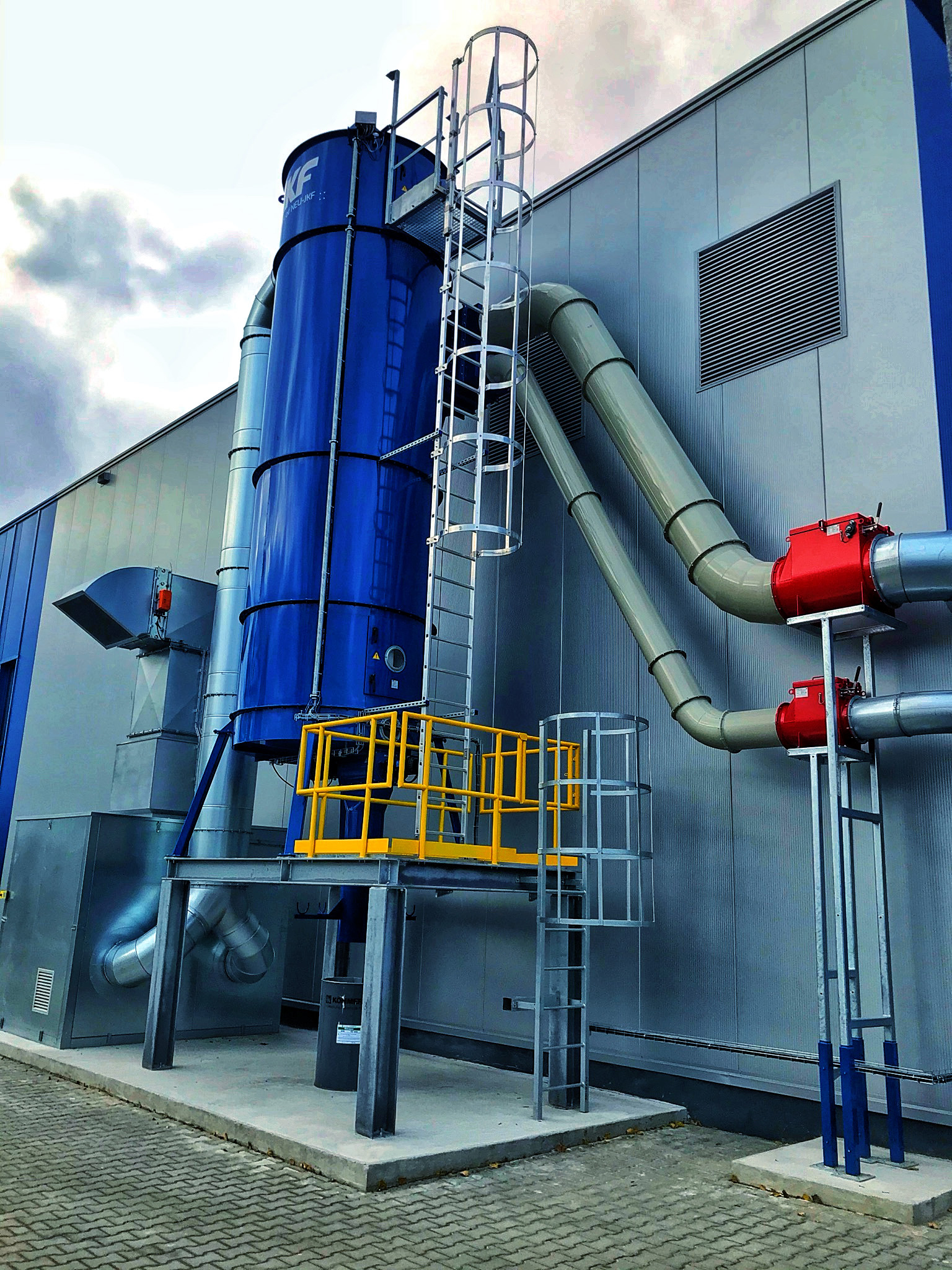
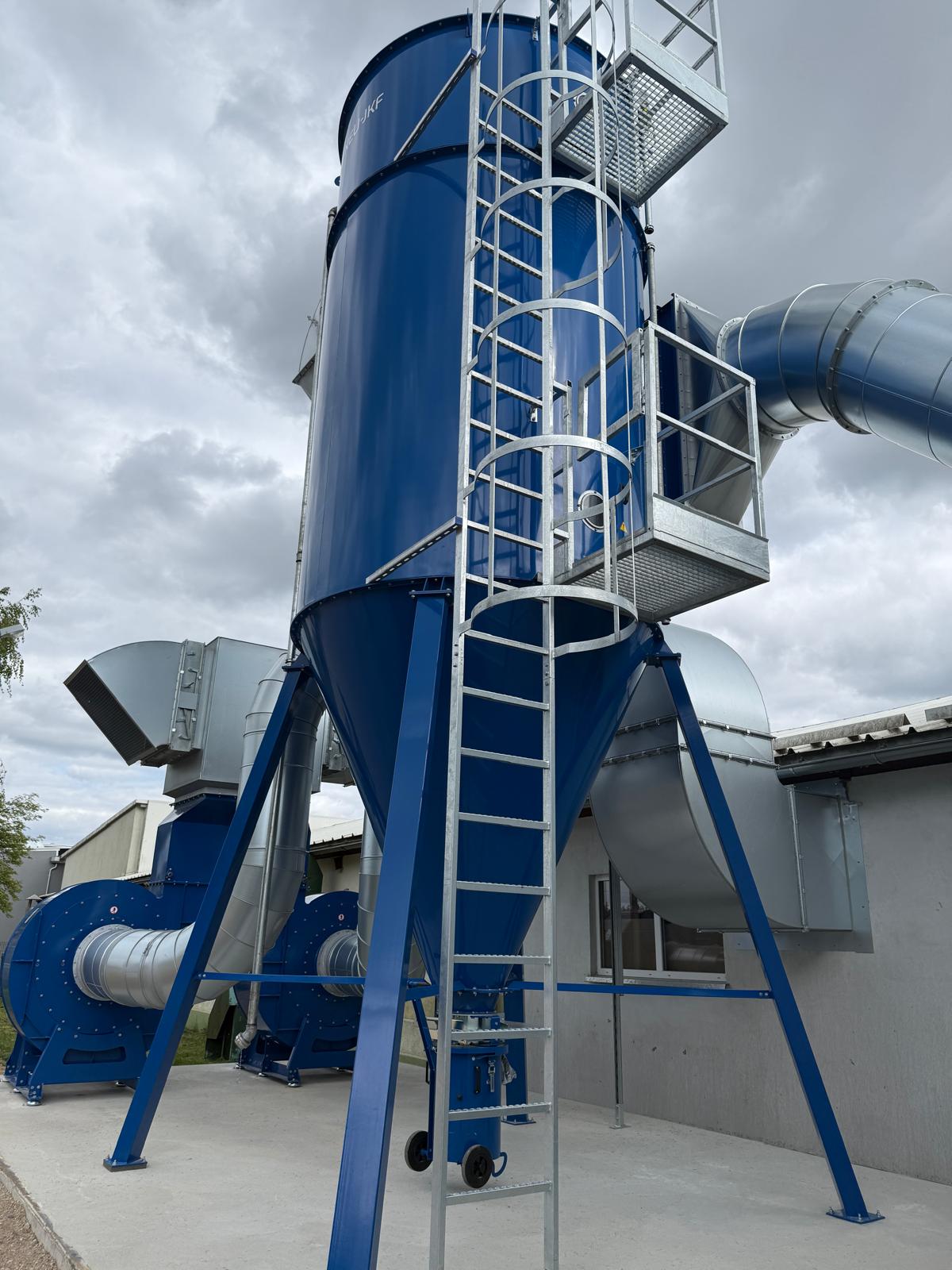
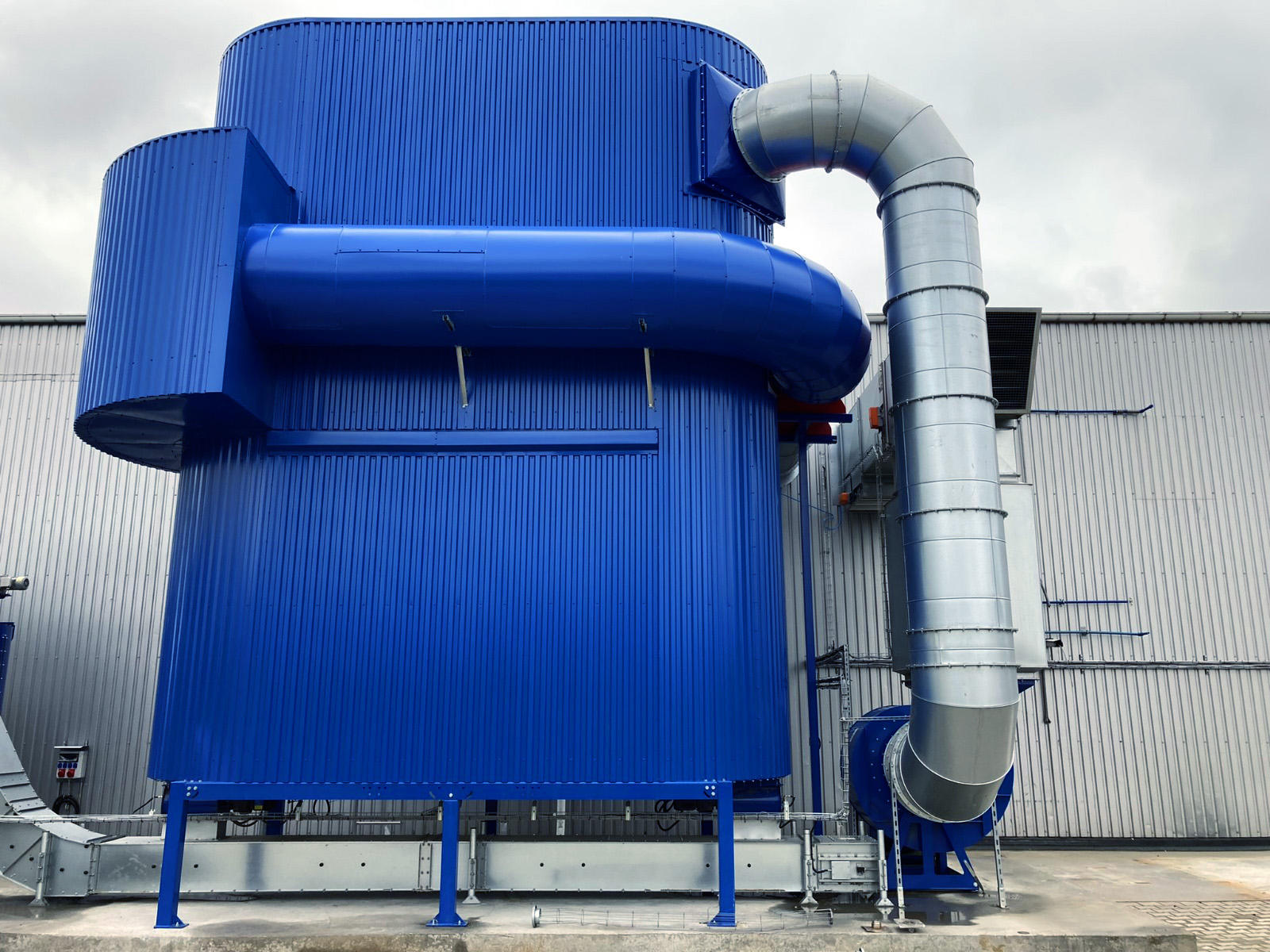
Installation of dust collection and air filtration systems modern solutions, such as bag installations, cyclone installations, electrostatic precipitators or wet filtration systems, effectively remove even the finest dust fractions. In the case of oil mists, it is necessary to use specialized aerosol separators.
Customized installation – Each plant requires a different approach. The dust collection system should be designed based on the type of production, the type of dust and the distribution of workstations. It is crucial to consider ATEX zones where there is a risk of explosion.
Regular maintenance and monitoring – Keeping the equipment in working order, checking the wear of filters and cleaning the air ducts are the basis for the effective operation of the system.
Employee training – Employees should know how to work safely in dusty environments, how to use personal protective equipment and how to respond in the event of a dust extraction system failure.
Continuous monitoring of air quality – dust sensors and aerosol analyzers enable real-time tracking of pollution levels and rapid response to exceedances of standards.
Take care of clean air in your company
NEU-JKF Ltd. specializes in the design and implementation of advanced dust extraction systems tailored to the needs of heavy industry. Our solutions comply with ATEX directives, withstand harsh operating conditions and are effective in removing even the most hazardous dust fractions.
Contact us – we will choose the right solution for your plant.