
PNEUMATIC TRANSPORT

Pneumatic conveying is an indispensable solution in many industries, especially where bulk materials need to be moved efficiently and hygienically.
Its versatility makes it ideal for transporting powders, granulates or other raw materials that require precision and safety. The systems are also an ideal choice for dusty materials, where control of dust emissions is crucial for environmental protection and working conditions.
The growing popularity of this technology is due to its ability to adapt to a wide variety of needs – from transporting fine powders to more demanding granules. Pneumatic transport of bulk materials not only streamlines production processes, but also minimizes the risk of raw material loss and ensures a high level of hygiene throughout the work cycle. Pneumatic conveying is used in many industries, such as in the food industry for the transfer of flour, sugar or cocoa, and in the chemical industry for the transport of plastic granulates.
Pneumatic transport of bulk raw materials – how does the process work?
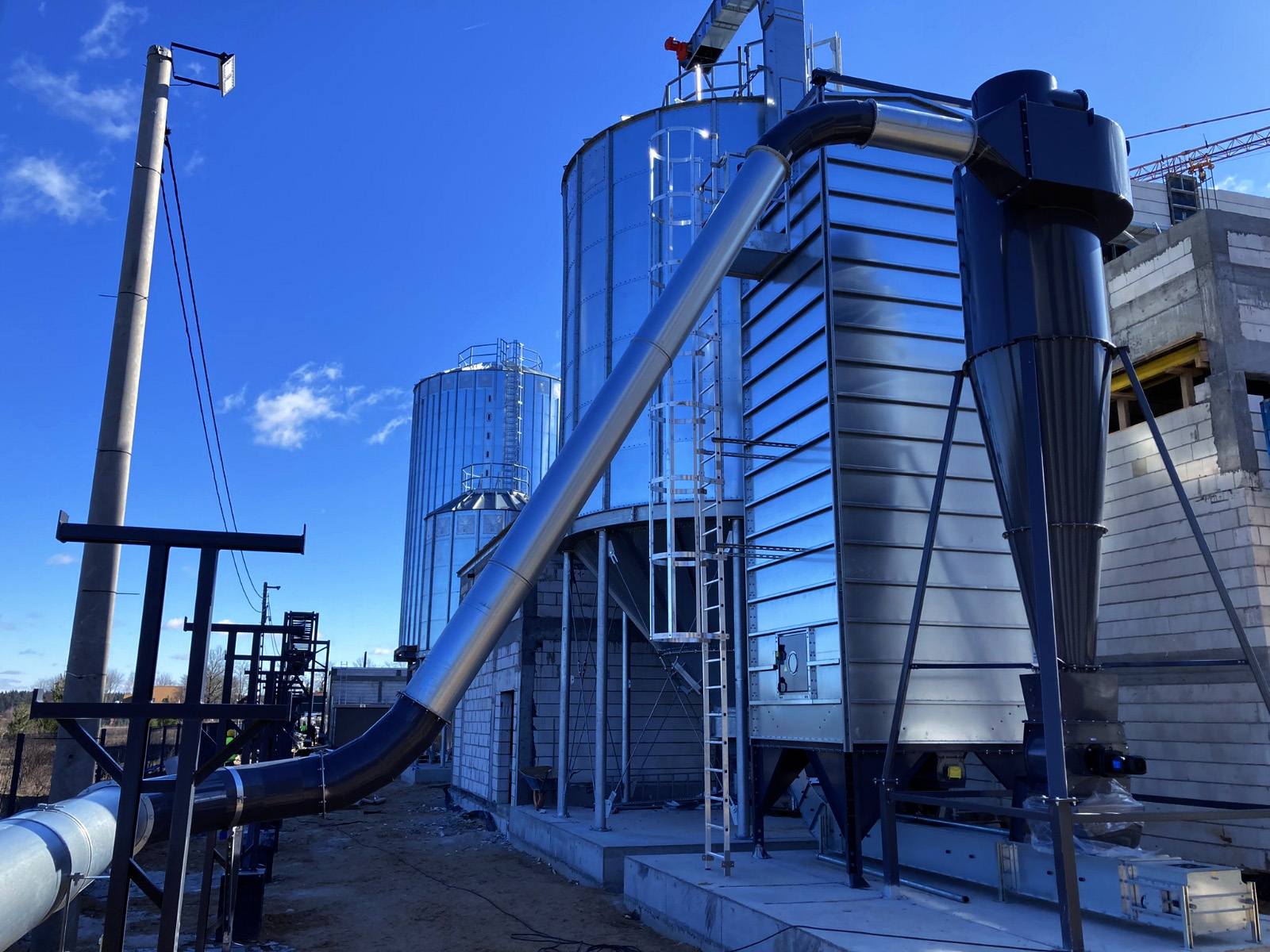
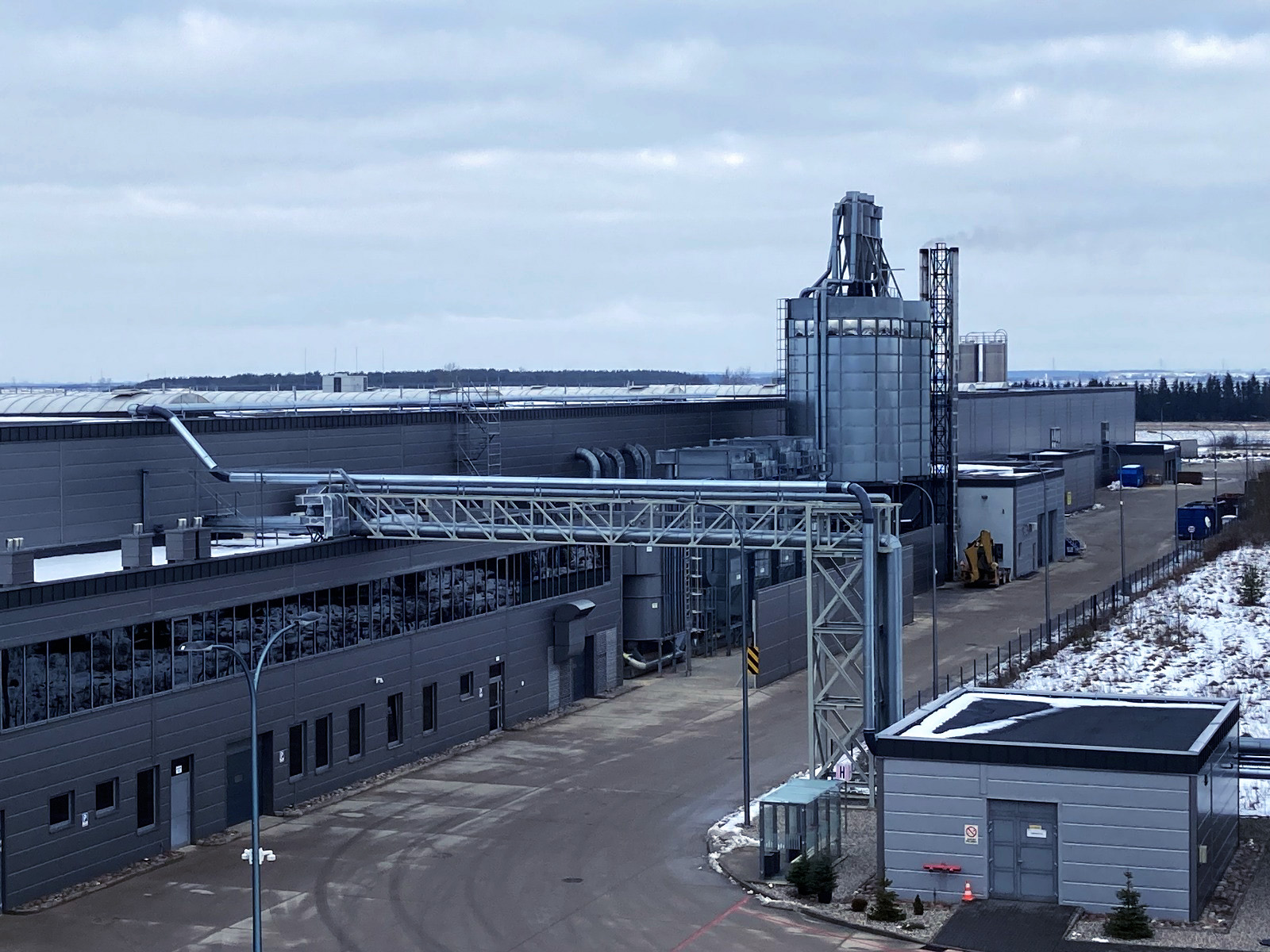
Pneumatic conveying is an advanced process that uses a stream of air or another gaseous medium to efficiently move bulk materials through closed pipelines. The entire system is based on a pressure differential that sets the raw material particles in motion, lifting them through the air and transporting them to their destination. To begin with, the raw material, such as granules, powders or other bulk materials, enters the system by means of special sluice or chamber feeders, which precisely dispense the amount.
The key role here is played by blowers or compressors, which generate the appropriate air flow. Depending on the specifics of the transport, a suction system is used, which sucks in the material, or a discharge system, where positive pressure pushes the raw material through the pipelines over longer distances. The pipelines are made of durable, abrasion-resistant materials, ensuring long-lasting operation of the system.
At the final stage, the transported bulk materials go to receiving tanks, where dust extraction filters are installed to eliminate excess dust, which is particularly important when working with dusty materials, ensuring the hygiene and safety of the entire process. Pneumatic transport of bulk raw materials is distinguished not only by its high efficiency, but also by its ability to maintain cleanliness and minimize waste of raw materials, making it an indispensable solution in many industries.
Industries using pneumatic transport
⦁ Food processing – Transportation of flour, sugar, spices and other food products where hygiene and precision are key.
⦁ Chemical: – Moving corrosive, toxic or difficult to handle materials such as granules or chemical powders.
⦁ Construction – Transportation of cement, ashes or other bulk raw materials used in concrete and precast production
⦁ Pharmaceutical – Safe transportation of raw materials for drug production, in compliance with strict hygiene and safety standards.
Thanks to their flexibility and reliability, pneumatic conveying systems meet the requirements of modern industrial processes, ensuring efficiency and high quality work.
Modernity and efficiency – advantages of pneumatic transport

High performance
Pneumatic transport allows materials to be moved quickly over long distances, reducing the time of logistics operations.

Environmental protection
The tightness of the systems minimizes dust emissions, which is crucial for ecology and occupational safety.

Loss reduction
The lack of direct contact with mechanical components minimizes the risk of damage to materials. The hermetic design also reduces the loss of raw materials, making the entire process more efficient and economical.

Versatility
These systems can be customized for a variety of spatial layouts. They easily handle both light, fine powders and heavier, more demanding granules. What’s more, their performance is reliable even in harsh conditions, such as high temperature or increased humidity.

Efficiency and hygiene
Closed pipelines eliminate the risk of raw materials coming into contact with the outside environment, which is crucial in industries such as food and pharmaceuticals, where safety and cleanliness are an absolute priority. The hermetic design further reduces the emission of dust into the environment

Economic benefits
Compared to traditional conveying methods, pneumatic systems consume less energy, which translates into real savings in operating costs. The absence of mechanical components, such as belts or feeders, also reduces the need for frequent maintenance and replacement of worn parts, further reducing system maintenance costs.
Technologies used in pneumatic transport
Pneumatic transport systems are divided into two main types: pressure transport and vacuum transport. Each of these technologies has its own specific applications:
1. Pressure Transport: Ideal for moving materials over long distances and in situations where high capacities are required. Materials are transferred in a sealed pipe system using compressed air.
2. Vacuum transport: Works well for delicate materials and shorter distances. The vacuum generated by the pumps sucks in the materials, eliminating the risk of damage
NEU-JKF is not only a technology provider, but above all a partner in optimizing industrial processes. We offer comprehensive support, from system design and implementation to service and modernization, so that each customer can enjoy a solution that is perfectly tailored to their needs. Thanks to our expertise and commitment, pneumatic conveying becomes an investment for our customers that brings real benefits.
Contact our team to find the right solution for your business.

