Safe storage of raw materials – silos for every industry

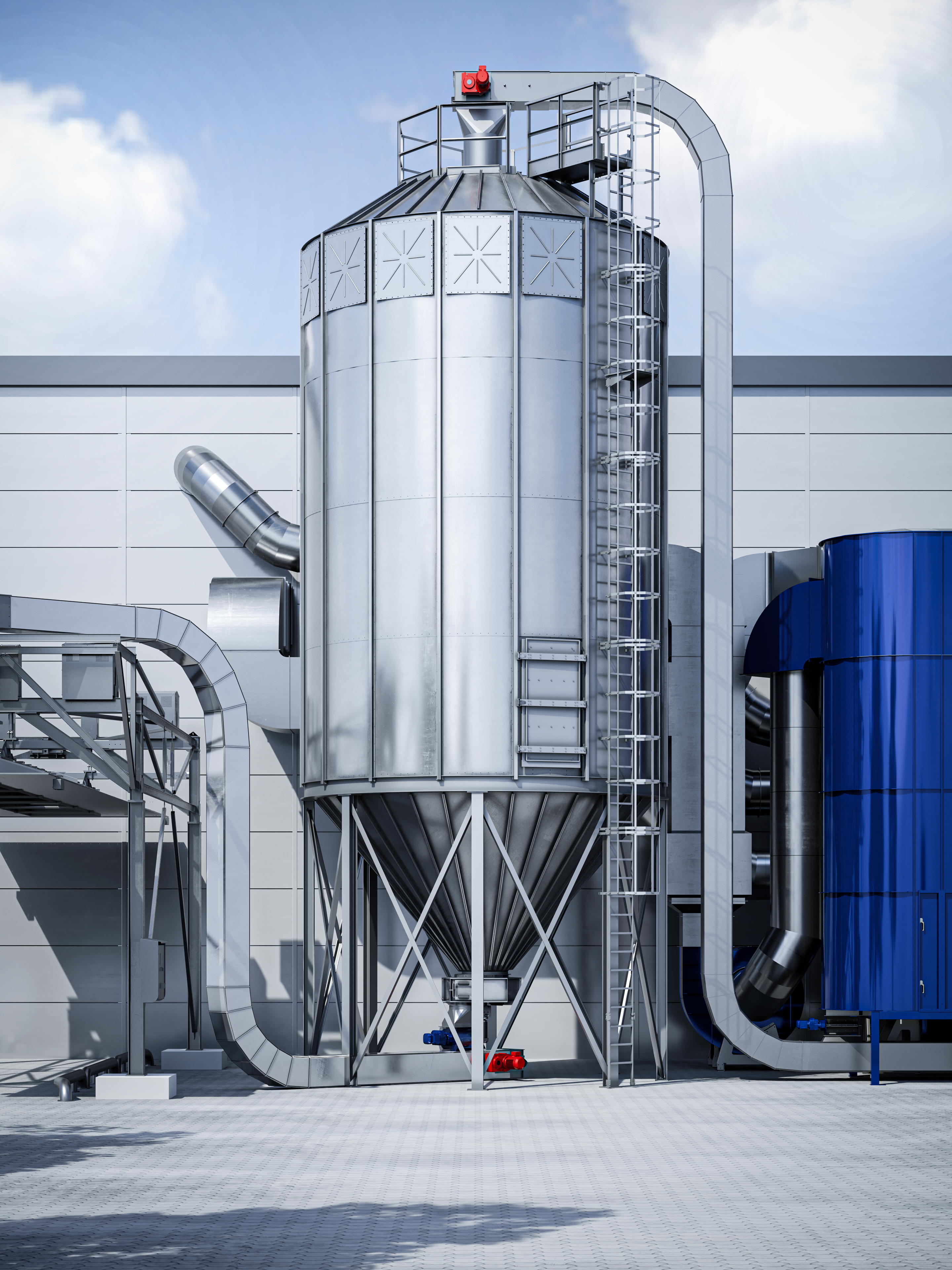
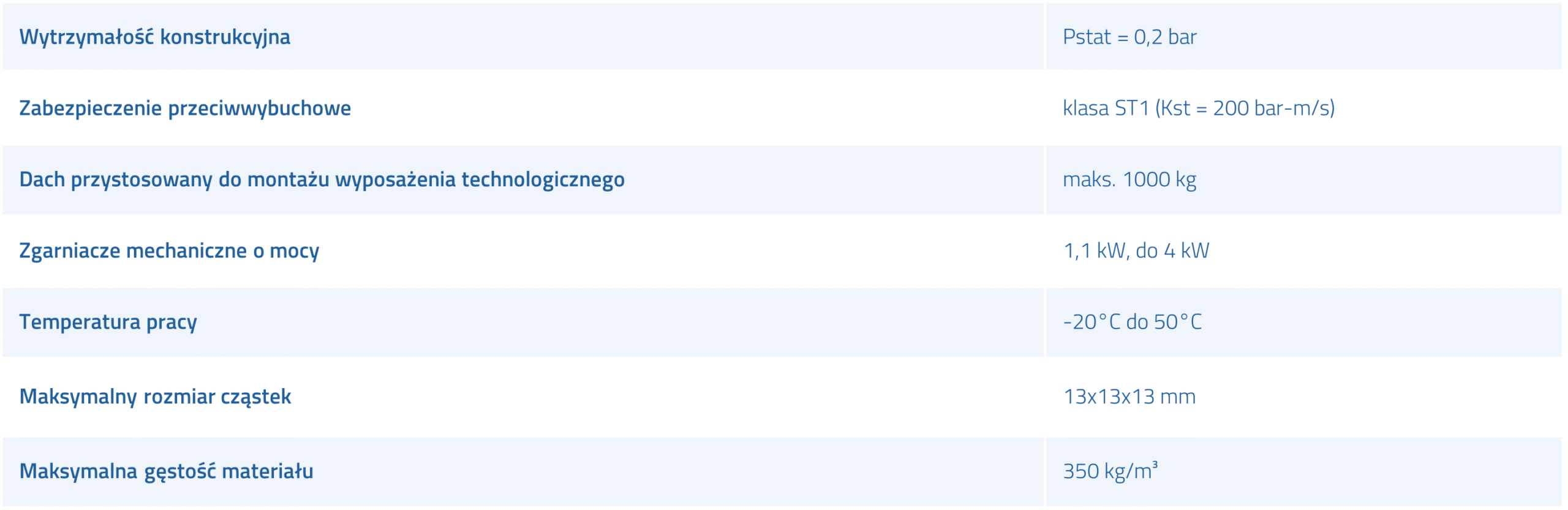
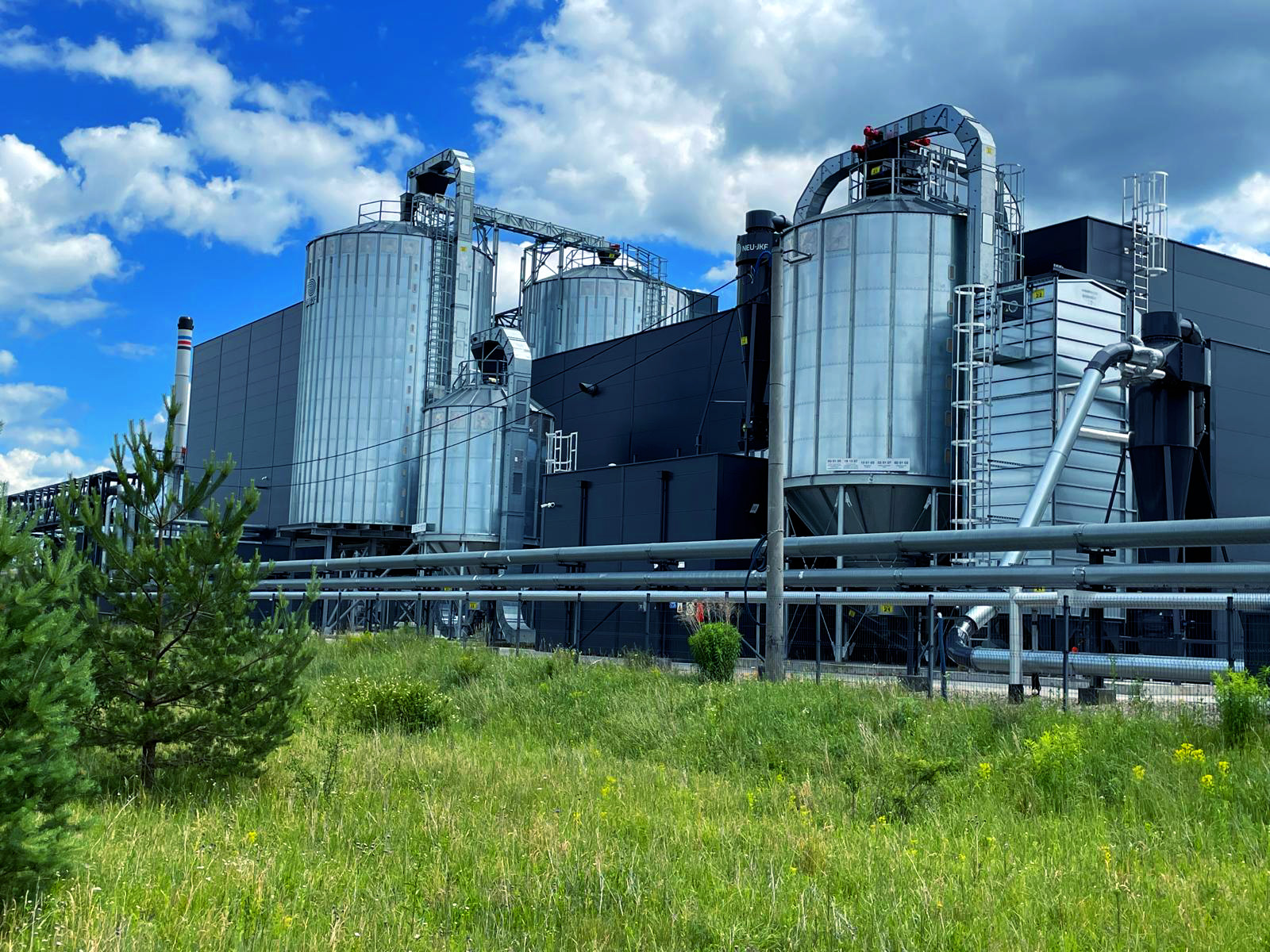
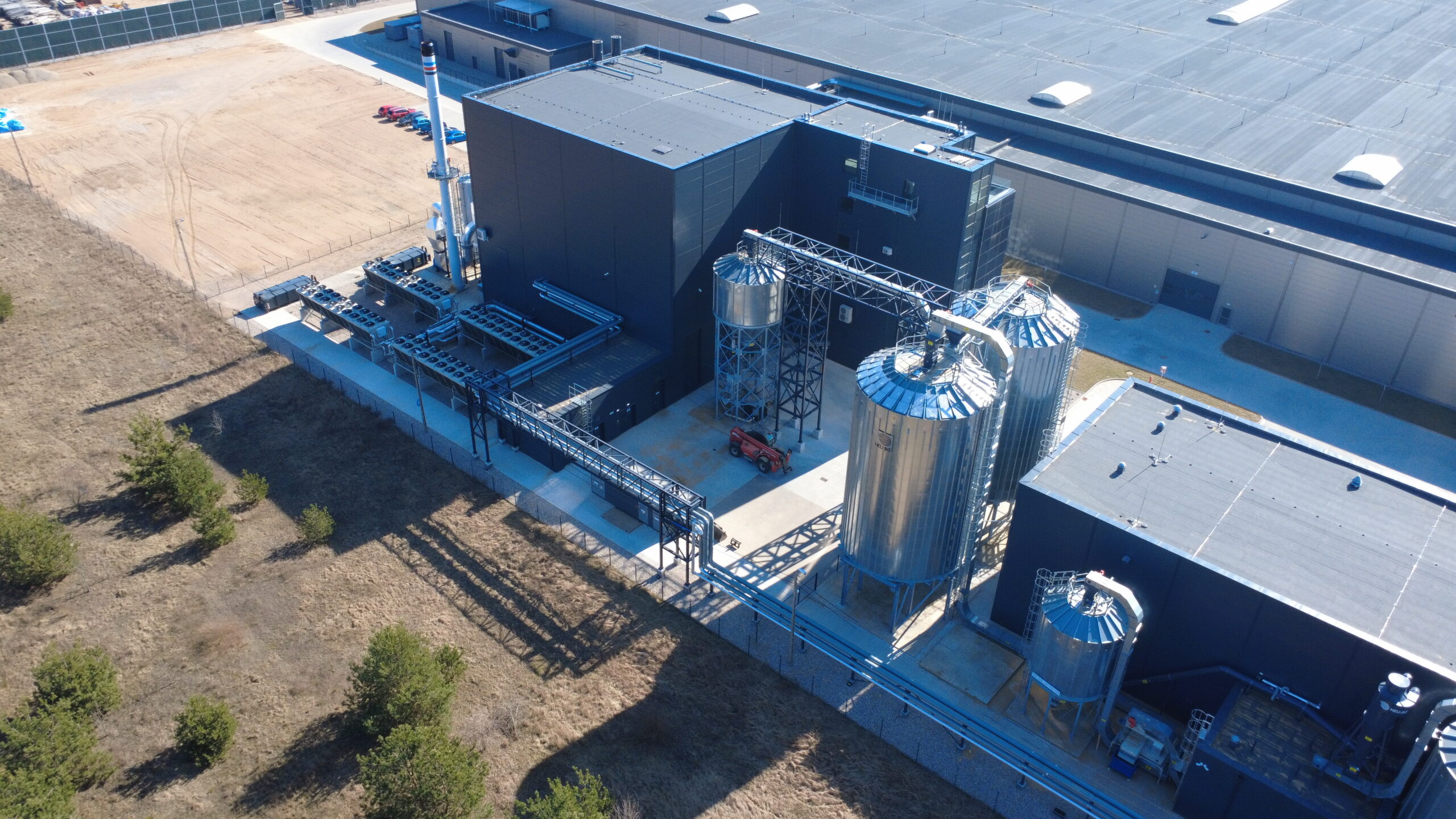
NEU-JKF silos are robust and safe structures designed for the storage of bulk materials with a bulk density of up to 350 kg/m³ , such as biomass, sawdust, wood chips or dust . Designed for reliability and long-term operation, they meet the requirements of modern industrial installations and strict safety standards.
The design is based on applicable European standards: EN 1990, EN 1991, EN 1992-4, EN 1993-1-1 and EN 1993-1-5 , which guarantees the highest quality and regulatory compliance.
NEU-JKF offers comprehensive solutions to support the efficient management of bulk materials in the wood, energy, grain and milling or manufacturing industries.
A picture in the gallery
A picture in the gallery A picture in the gallery

UNIQUE FEATURES.

Quick installation Icon

Quick installation

Secure access for service and maintenance Icon

Secure access for service and maintenance

Easy expansion Icon

Easy expansion

Prefabricated compact components Icon

Prefabricated compact components

All silo components galvanized Icon
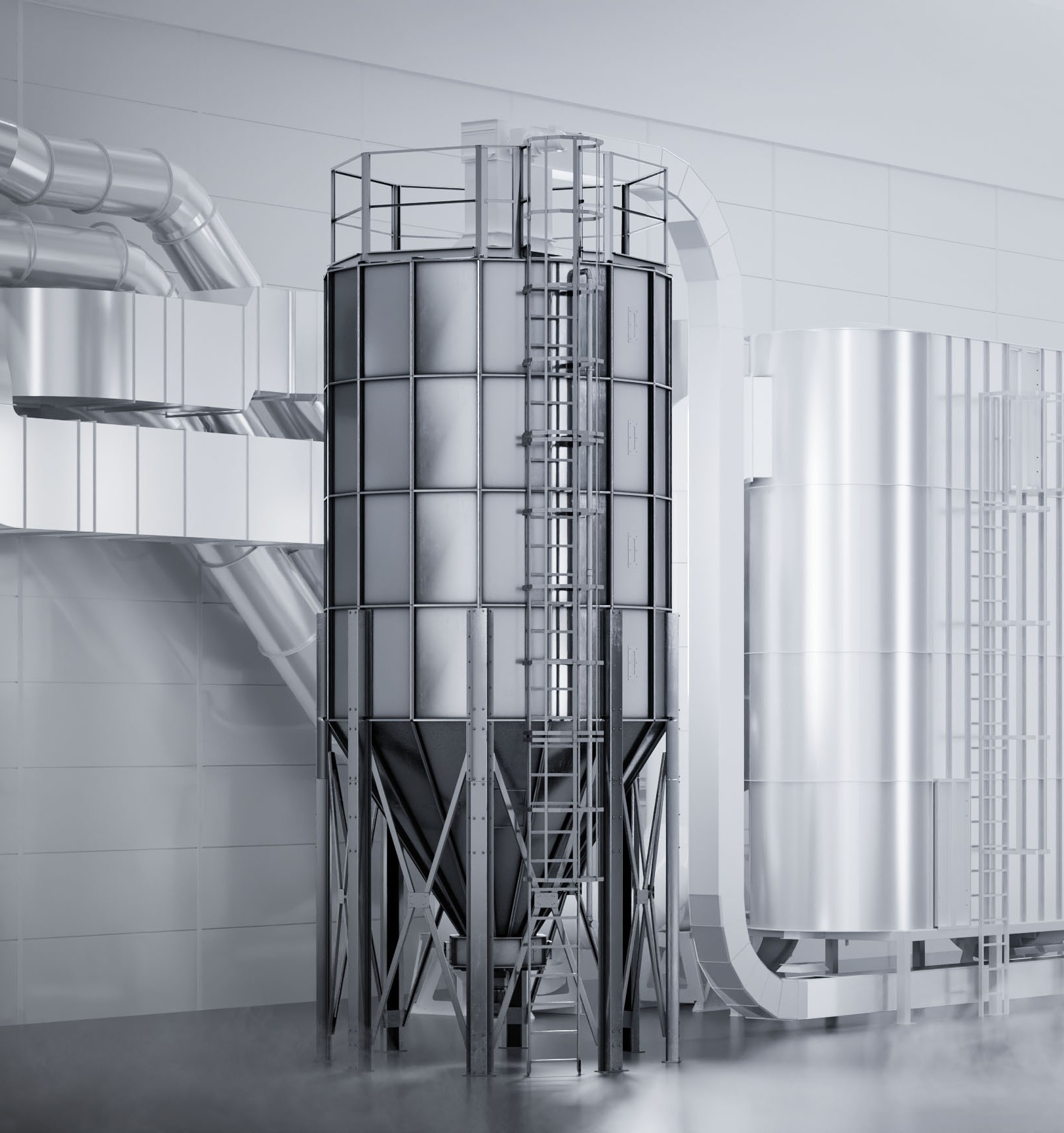
All silo components galvanized

A picture in the gallery
A picture in the gallery A picture in the gallery

STANDARD EQUIPMENT

– Decompression panels (mounted in the cylindrical part or on the roof on request) in accordance with EN 14491 or NFPA 68
– Roof structure adapted for installation of technological equipment
– Silo emptying system equipped with a screw conveyor with adjustable capacity
– Standard inlet D500 mm (other sizes available on request)
– Ladders, platforms and walkways made in accordance with ISO 14122-3; ISO 14122-4 standards
– Dry riser installation in accordance with current standards
– Access hole for quick emptying of the silo in accordance with EN 12779:2015
– Inspection hatch 600×600 mm mounted on the roof with fall protection in accordance with EN 12779:2015.
– Pressure sensor.
– Minimum and maximum level sensors

OPTIONAL FEATURES

– Silo emptying system – standard up to 30 m³/h, special version up to 80 m³/h
– System to prevent bridges from forming inside the tank
– Possibility to install a lightning conductor

SILO CONFIGURATION

– Quick and easy silo configuration – Elements such as the ladder, platform, dry riser, sights and scraper can be fully configured
at any angle from 0° to 360°
– Silo design with flat bottom available on request
– Mechanical scrapers for flat bottom silos up to 80 m³/h and above

SIZES
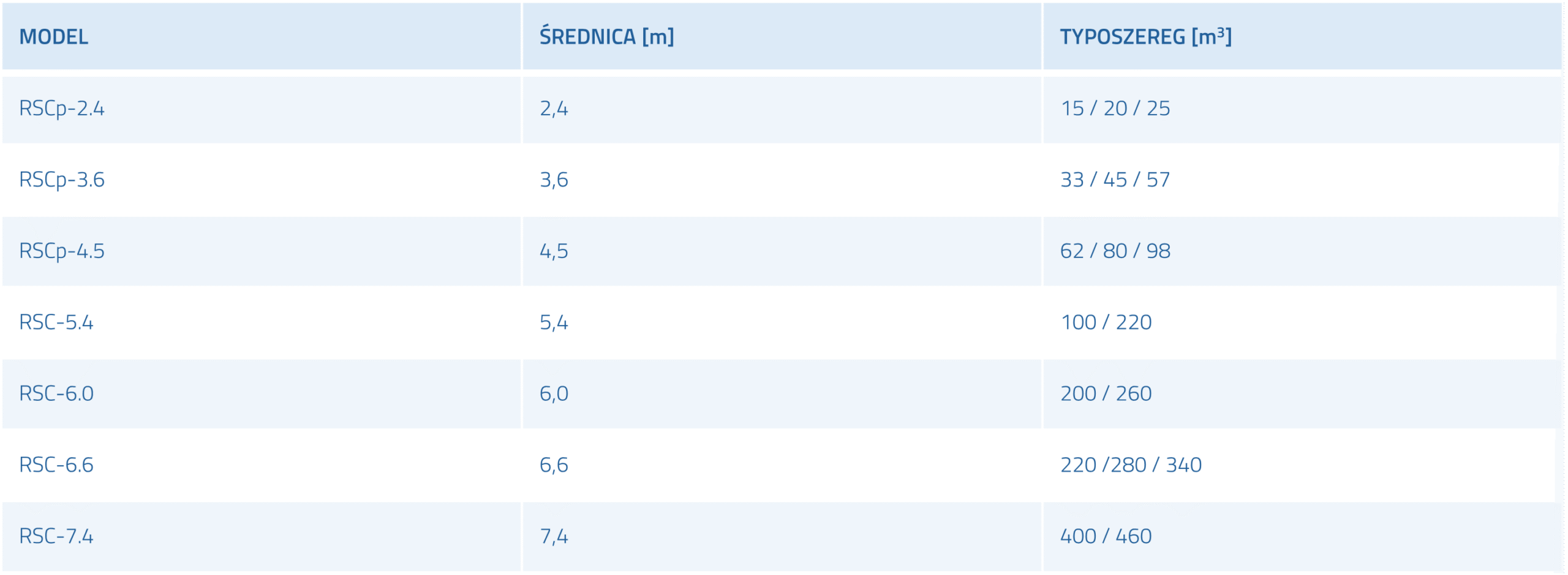
A picture in the gallery

SPECIFICATIONS

A picture in the gallery

Sawdust silo

The sawdust silo is a key piece of infrastructure in woodworking and related industries, providing safe, controlled storage of lightweight bulk fractions. It protects the material from moisture and contamination, while facilitating the organization of waste management and the continuity of production processes.
In industrial environments, the silo works in conjunction with dust collection and pneumatic or mechanical conveying systems to stabilize the flow of material between stations. This reduces downtime, improves batching and enhances order on the shop floor. In applications outside the wood industry, it can be used to collect other bulk raw materials.
Structures designed for sawdust are designed taking into account health and safety requirements, as well as explosion protection (ATEX) and fire protection. The selection of a specific solution should be related to the nature of the process, the properties of the material and the required mode of operation of the installation – technical parameters are decided at the design stage to ensure compliance with standards and operational efficiency.

What are the uses of sawdust silos?


Silos are used primarily for buffering and seasoning of wood fractions (sawdust, chips, dust), so as to ensure stable feeding of
process lines, production of biomass fuels or preparation of raw material for further processing. In practice, this translates into better
internal logistics, less material loss and greater predictability of equipment operation. A well-designed system enables efficient loading and receiving
of material, reduces secondary dust emissions, and supports the maintenance of order and safety in the production zone.

Types of sawdust silos


In practice, there are several groups of solutions, selected according to the nature of the process and the properties of the material: among others, segmented steel structures
(usually galvanized, as well as variants differing in the method of unloading and integration with pneumatic or mechanical transport.
The choice of a particular type is related to the target capacity, the required tightness and the mode of operation of the installation. For inquiries about sawdust silos
, segmented steel structures with the possibility of quick assembly are most often recommended.

RSC/RSCp Series (NEU-JKF)


Modular steel sectional silos designed for light wood fractions. Prefabricated sections allow for quick installation and selection of
diameter and height to suit local conditions. The range includes capacities from about 15 to 460 m³, making it easy to match line capacity and available space.

Structural components of sawdust silos


The structural components of sawdust silos include the body (steel sheet shell), the bottom with discharge system, the roof with venting
, and the mounting and control and measurement equipment. In practice, it is crucial to ensure rigidity and tightness of segment connections, proper
foundation and ergonomic service access (ladders, safety baskets, platforms, inspection hatches).

Construction material of silos


Hot-dip galvanized steel is most often used (corrosion resistance and favorable weight-to-strength ratio). The choice of material is determined by
external conditions, operational requirements, available space and the planned method of foundation.

Conveyor systems and feeders


Integration with transport determines the functionality of the entire plant: loading ports for pneumatic transport or mechanical feed,
and at the outlet – gravity unloading with hopper, mechanical extinguishers or screw/chain conveyors. The compatibility of
with the existing installation (diameters, capacities, feed heights) and predictable flow control are important.

Fire and explosion protection components


In hazardous areas, stress relieving and incident mitigation components are provided, as well as early detection
and suppression systems. Among the most commonly used are relief panels/flaps, ignition separation on conveyor lines, and fire detection
and suppression systems. The extent and type of protection is selected according to the hazard category and design requirements.

Do you have questions? Want to learn more?

Technical support Download Privacy policy

NEU-JKF Sp. z o. o.

Berzyn 82

64-200 Wolsztyn

Poland

Tel: +48 68 347 07 00 info@neu-jkf.pl