

A well-designed dust extraction and ventilation system should do much more than just “pull in dust.”
It should:
– effectively pick up contaminants right at the source,
– maintain adequate airflow throughout the system,
– be tailored to the type of machinery and type of dust,
– reduce energy loss,
– support process safety,
– provide the ability to expand as the company grows.
This is very important from the point of view of small and medium-sized plants. The owner does not need the biggest solution possible, but one that realistically works, does not complicate the work and does not generate unnecessary operating costs.
This is why it works best not to buy individual components, but to look at the plant as a whole process.
What does an effective system look like for a carpenter shop, furniture factory or sawmill?
In practice, different elements of the system can be used in a carpentry shop, furniture plant or sawmill – depending on the scale of production, the layout of the shop, the type of machinery and the amount of waste.
Key elements of the installation
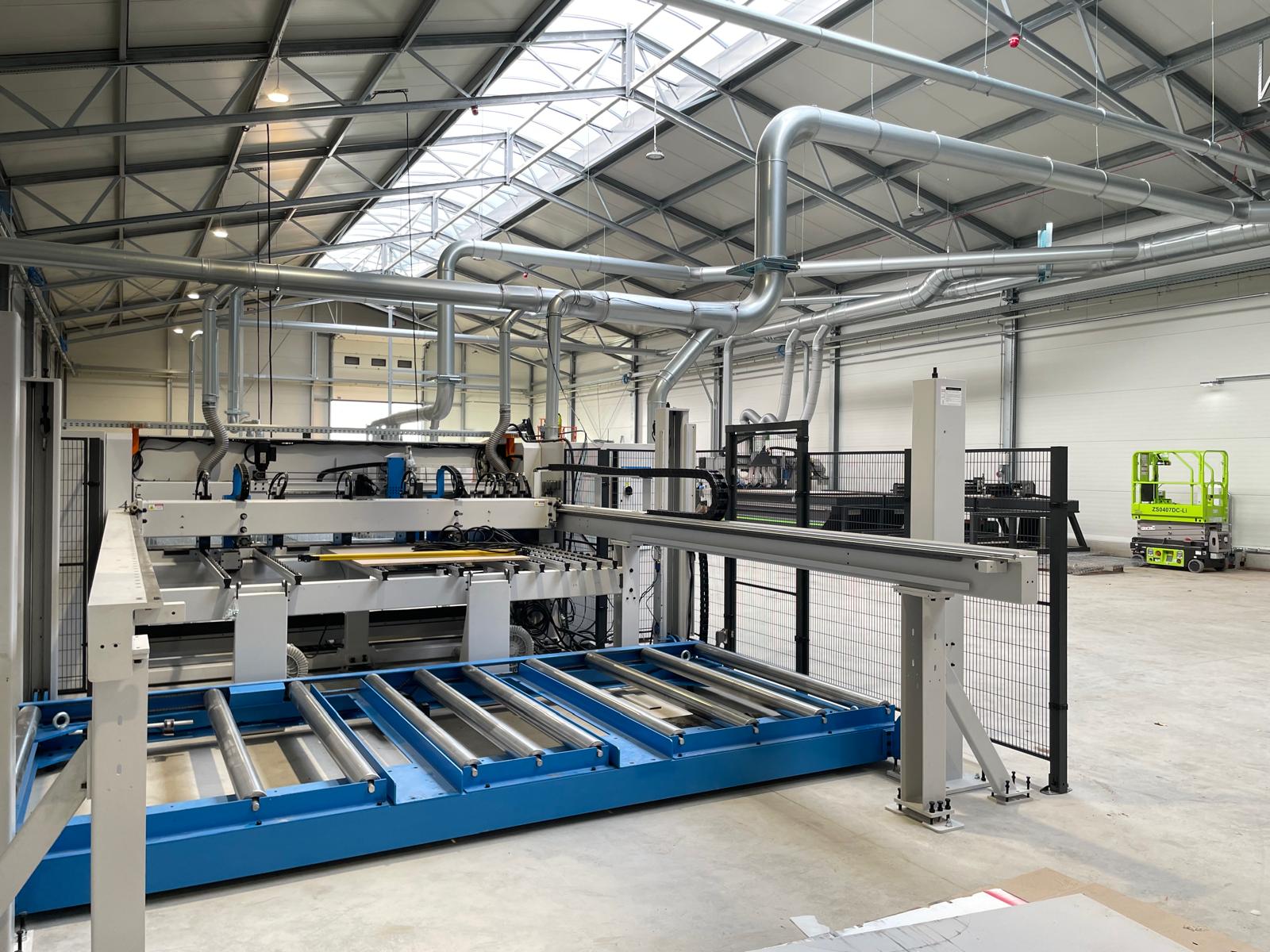
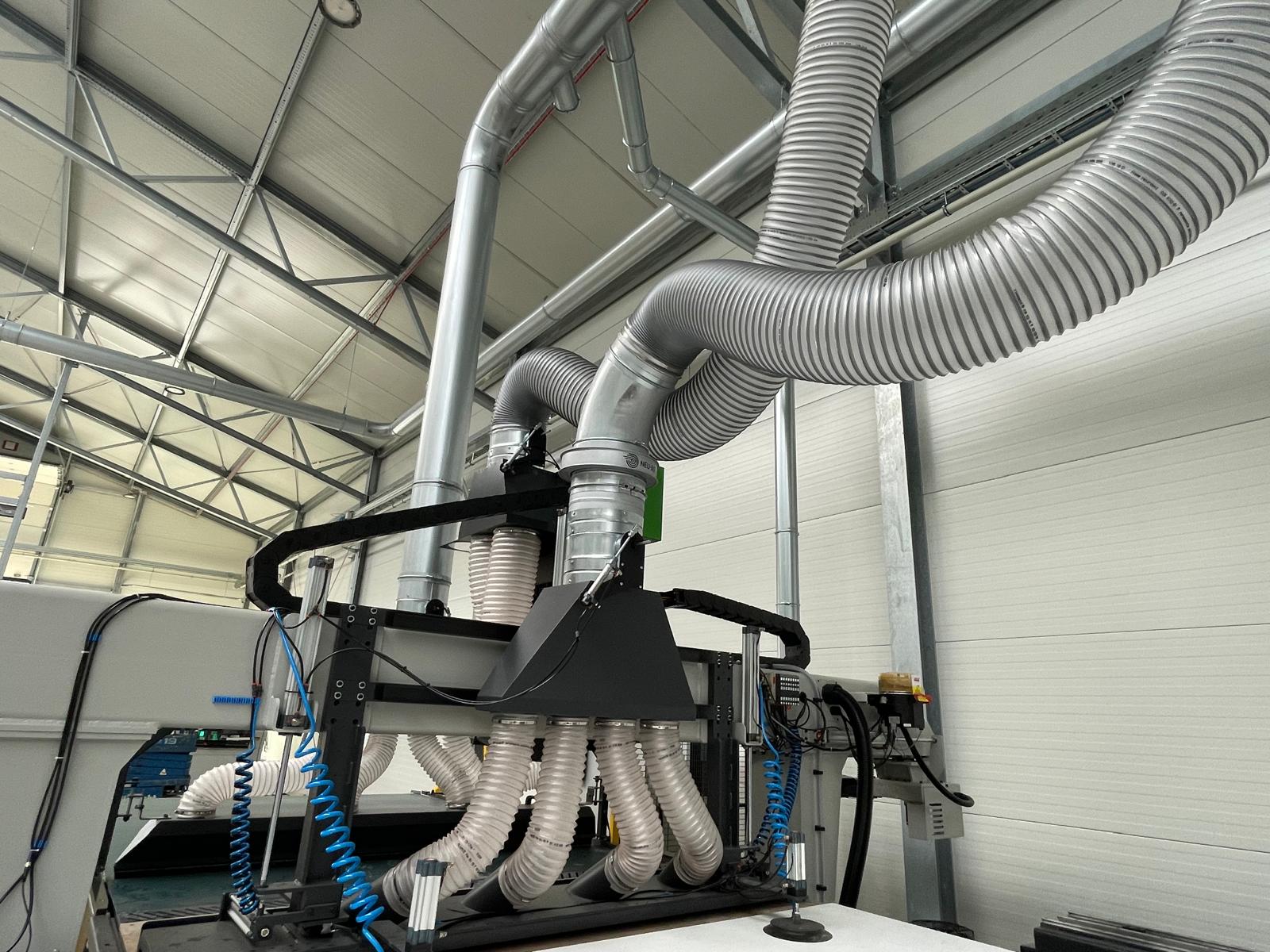
EXTRACTION POINTS AT THE MACHINES – this is where the effectiveness of the whole system begins.
The best filtration and the most powerful fan will not help if the dust is not effectively captured where it is generated. That’s why on-site extraction at machines is the absolute foundation of any dust collection system.
In practice, this means that any machine that generates dust or chips – a saw, milling machine, grinder, planer or CNC center – should have a properly designed collection point.
And here’s where the important point comes in: extraction is not just “a pipe connected to the machine. “
To work effectively, it must be:
– tailored to the specific type of machine and the way it works,
– placed exactly where the dust is generated,
– designed to “catch” contaminants before they disperse into the air,
– powered by the right airflow.
Frequent problems in small plants
In many workshops and smaller plants, one encounters solutions that “are there” but do not work optimally because:
– too small diameter of connections,
– improper arrangement of extraction stubs,
– makeshift connections,
– lack of extraction at machine parts,
– use of one extraction for several workstations without recalculation of capacity.
The result? Dust is not effectively collected, but ends up in the air on the hall.
Why it’s important?
Well-designed local extraction:
– reduces dust already at the source,
– reduces the load on the entire system,
– improves operator comfort,
– affects the quality of machining,
– reduces the amount of dust circulating in the system.
So it can be said simply:
if the extraction at the machine works well, the whole system is likely to work well. If not – the rest of the system just “puts out the fire”.
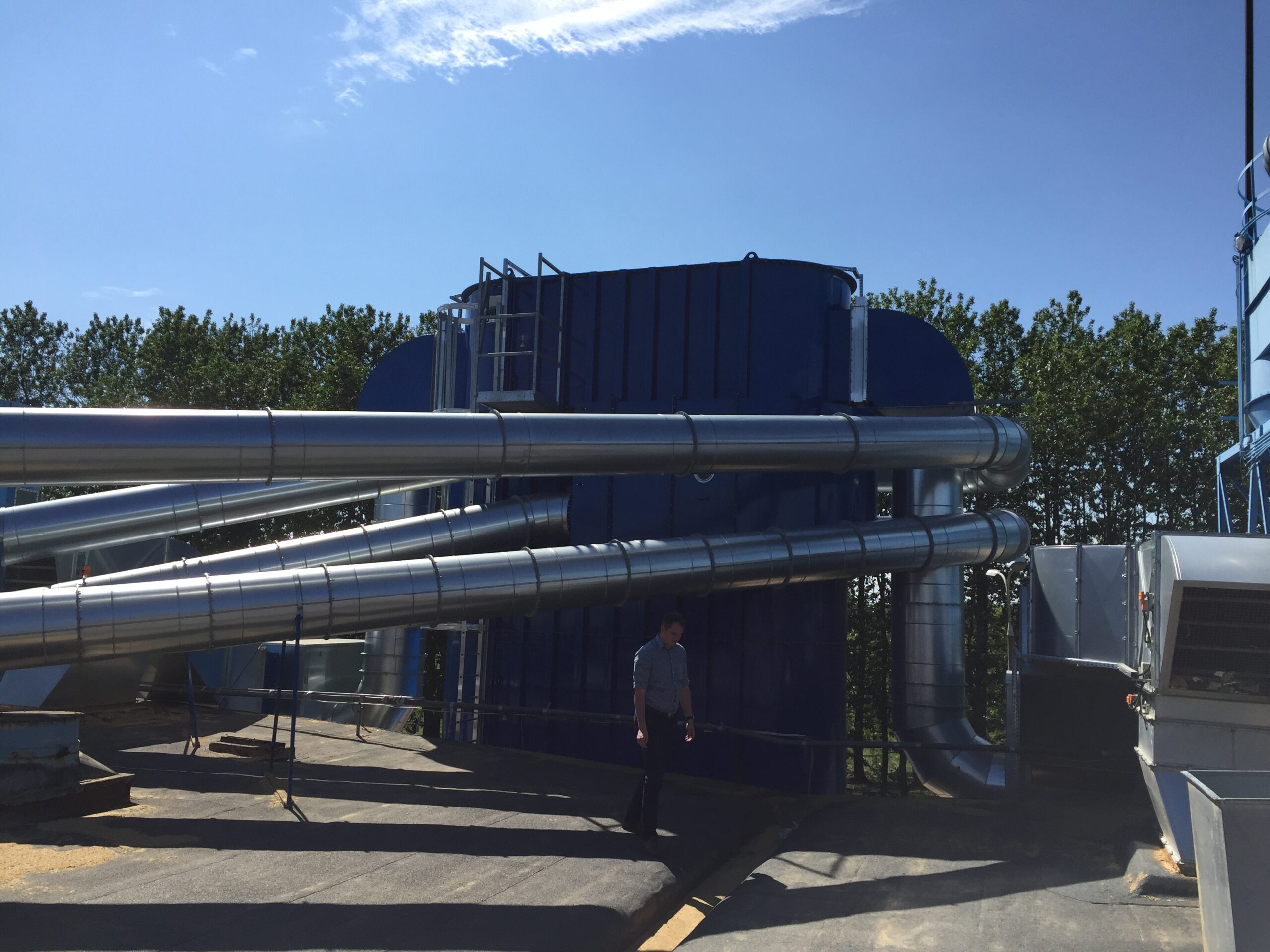
PIPE INSTALLATION – blood system of dust collection system
If onsite extraction is the collection point, the piping system is what transports the dust and chips further. And while it is often treated as a secondary component, in practice it has a huge impact on the efficiency of the entire system.
This is where problems most often arise, causing the installation to work in theory but be inefficient in practice.
Why does piping design matter so much?
A dust collection system is not just about getting the air to flow, but getting it to flow at the right speed, direction and stability.
A poorly designed system can cause:
– performance drops at the ends of the system,
– deposition of material in the ducts,
– clogging of the system,
– increased energy consumption,
– unstable operation of the whole system.

Frequent mistakes in practice
In small and medium-sized plants, piping is very often built in stages – with the addition of more machines. This is natural, but it carries the risk of:
– random pipe diameters,
– excess elbows and bends,
– unnecessarily long routes,
– lack of tightness,
– lack of flow balancing.
Over time, the system begins to perform worse and worse, and the problem is not obvious, because “after all, everything is connected.”
What does a well-designed installation provide?
A properly designed piping system:
– ensures even dust collection from all machines,
– minimizes pressure losses,
– reduces the risk of material build-up,
– improves energy efficiency,
– stabilizes the operation of the entire installation.
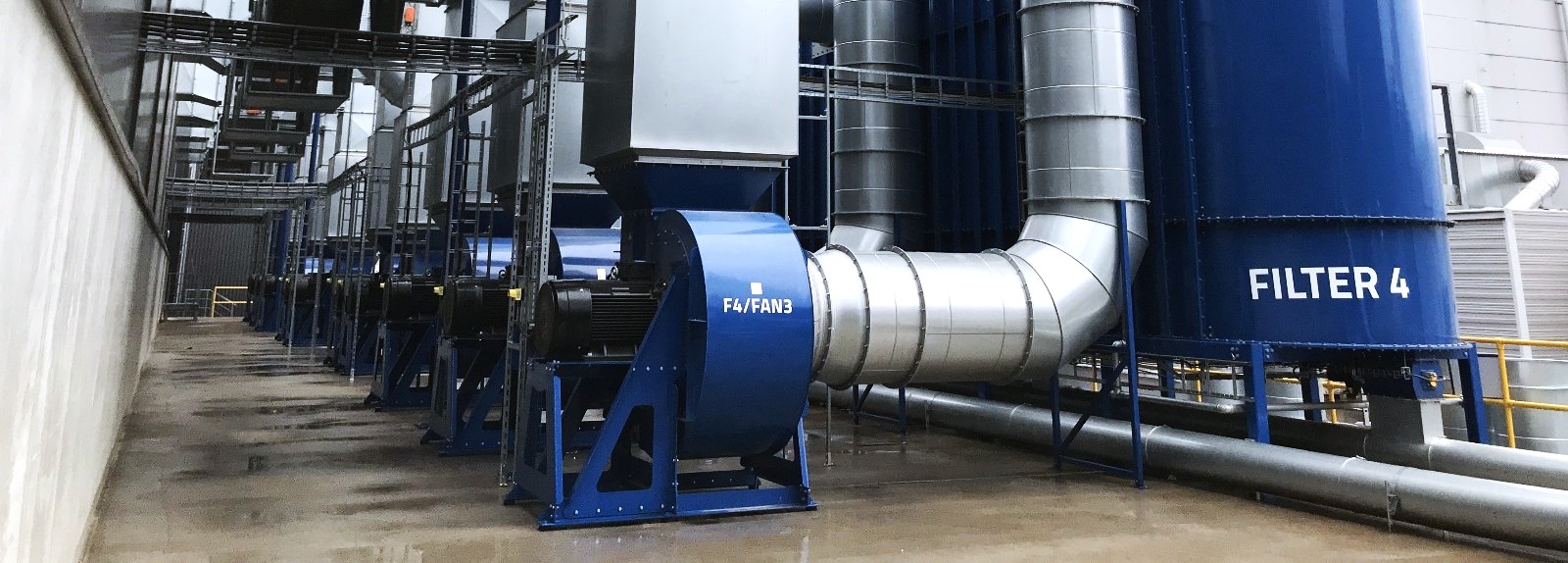
FAN – the heart of the installation.
If the local exhausts are the point of dust capture, the piping is its transport route, and the filter unit is where the air is cleaned, then the fan is the element that sets the whole system in motion.
It can be said simply: the fan is the heart and drive of the entire dust collection system.
It is the one responsible for generating the appropriate air flow so that dust, chips and fine contaminants can be effectively collected from the machines, transported through the plant and directed for further separation and filtration.
Without a well-chosen fan, even the best-designed system components will not work as they should.
Why does the fan matter so much?
In practice, the effectiveness of the entire system depends on whether the system is able to maintain the right operating parameters under all conditions – regardless of whether one machine is running, several stations are running simultaneously, or the plant is operating under full load.
It is the fan that is responsible for ensuring that the installation has the following:
– efficiency,
– suction power,
– flow stability,
– ability to transport dust and waste.
If this component is mismatched, the effects are felt very quickly – and usually not just in one place, but throughout the system.

Frequent problems in practice
In many smaller plants, a fan is selected too generally – on the basis of “so that it has power” or “so that it is similar to the one before.” Meanwhile, motor horsepower alone does not solve the problem if the unit is not matched to the specific plant.
The most common mistakes are:
– too little capacity relative to the actual number of machines,
– mismatching the length and resistance of the installation,
– unstable operation under varying loads,
– oversizing causing unnecessary energy consumption,
– using a solution that does not correspond to the nature of the material being transported.
In practice, this can lead to a situation in which one part of the hall is working properly, while another is constantly deficient in terms of dust collection. Or conversely, the system operates too aggressively, generating unnecessary operating costs and suboptimal operation of the entire plant.
What gives you a well-chosen fan?
A properly selected fan ensures:
– effective collection of dust directly at the machines,
– efficient transport of material through the plant,
– stable cooperation with the filter unit,
– less risk of dust accumulation in the ducts,
– more predictable and energy-efficient operation of the entire system.
This is especially important in smaller plants, where each failure, drop in productivity or the need to constantly “rescue” the plant means a real organizational and cost problem.
It’s not about the “most powerful” fan, it’s about the right one.
This is a very important issue. In the case of dust collection systems, better does not always mean bigger. A fan that is too large can generate unnecessary energy consumption and disrupt the system’s operation, while a fan that is too small simply cannot cope with the task.
Therefore, the selection of this component should result from the overall design of the installation – taking into account:
– the number and type of machines,
– dust and waste characteristics,
– the length and geometry of the installation,
– filtration parameters,
– the expected production load.
In a well-designed system, the fan is not an incidental addition, but a consciously selected drive of the entire system.
In practice, it is the fan that determines whether the system “pulls” as it should.
For a plant owner or manager, the simplest conclusion is this: if the system is to operate effectively, stably and predictably, the fan must be treated as one of the key elements of the entire solution – not just as an “engine for extraction.”
Because in practice, it is the one that determines whether the entire system will really support production or just give the impression that it works.
FILTRATION UNIT – the lungs of the whole system
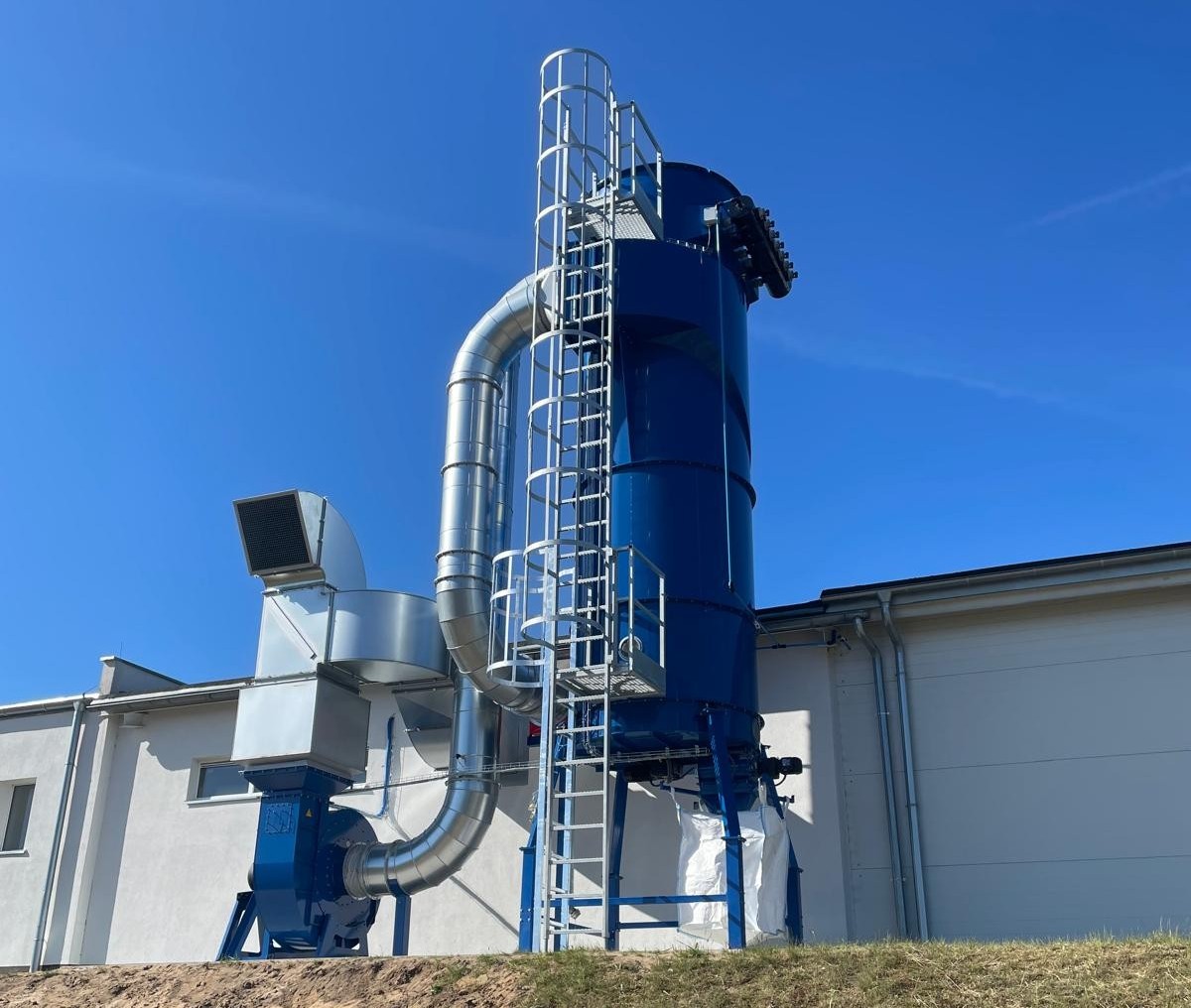
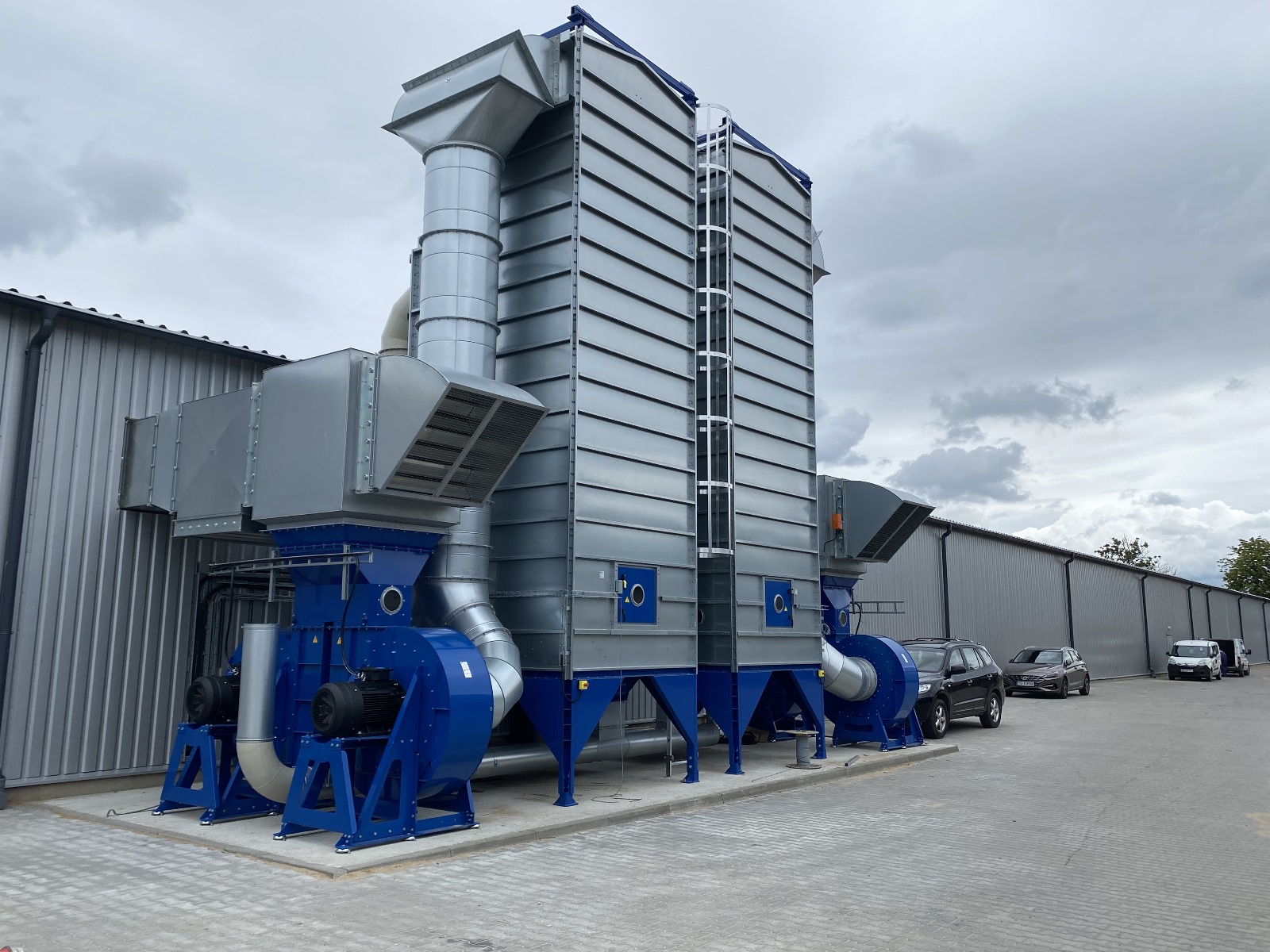
It is in the filter unit that settles the question of whether the air returning to the hall (or dumped outside) is actually cleaned. It can be said that it is the most important part of the entire dust collection system.
Its task is to separate dust from the air and ensure that:
– the air meets the quality requirements,
– the system works stably,
– the system does not lose efficiency with time.
Why is filter selection so important?
There is no one-size-fits-all filter for everything. The right choice depends on, among other things:
– the type of material being processed,
– the size and nature of the dust,
– the intensity of production,
– the amount of air in the plant,
– the method of waste collection,
– safety (ATEX) requirements.
An ill-suited filter unit can cause:
– a decrease in the efficiency of the entire system,
– frequent filter clogging,
– increased operating costs,
– dust emission problems,
– greater risk of failure or hazards.
Typical challenges in small plants
In practice, one often encounters:
– filters selected “by eye” or by price,
– equipment not adapted to the current scale of production,
– lack of automatic filter cleaning,
– problems with receiving material from the filter unit,
– lack of consideration of explosion-proof aspects.
The effect is that the filter becomes the “bottleneck” of the entire installation.
What does a well-chosen filter unit give you?
A correctly selected and configured filter:
– maintains stable system performance,
– effectively separates dust from air,
– reduces emissions,
– reduces maintenance frequency,
– works with a waste discharge system,
– can be integrated with ATEX solutions.
In practice, this means one thing: if the filter works well, the whole system runs smoothly and predictably. If it doesn’t – problems will occur regularly, at various points in the installation.
WASTE DISPOSAL SYSTEM – an often overlooked, but key component of the entire plant.
In many plants, most attention is paid to whether dust and chips are being effectively collected from machines. This is, of course, very important, but equally important is the question: what happens to the waste further down the line?
Because a well-functioning dust collection system does not end with extracting the dust from the saw, milling machine or grinder. The entire system still has to transport this material safely and efficiently, separate it, store it or prepare it for further collection.
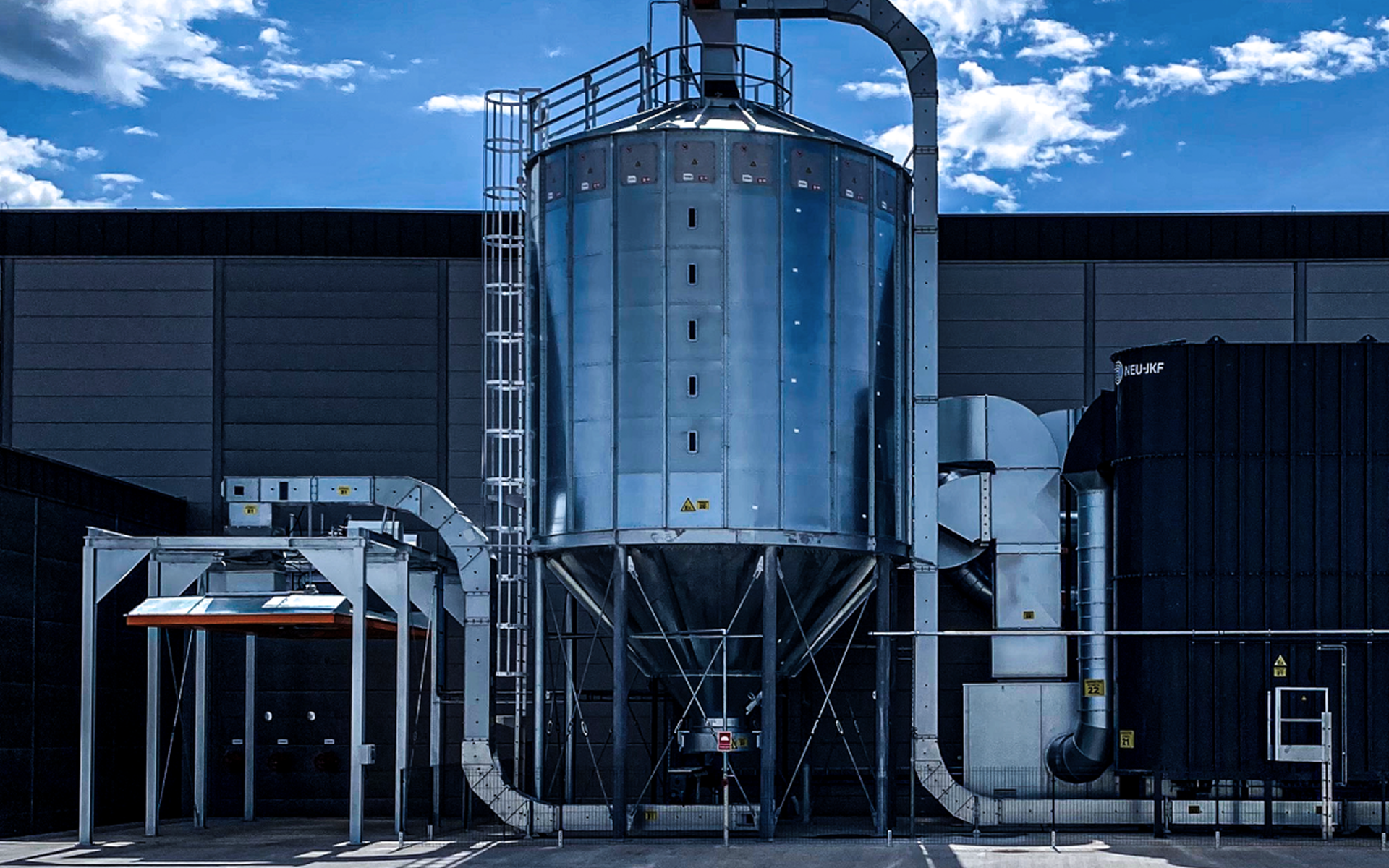
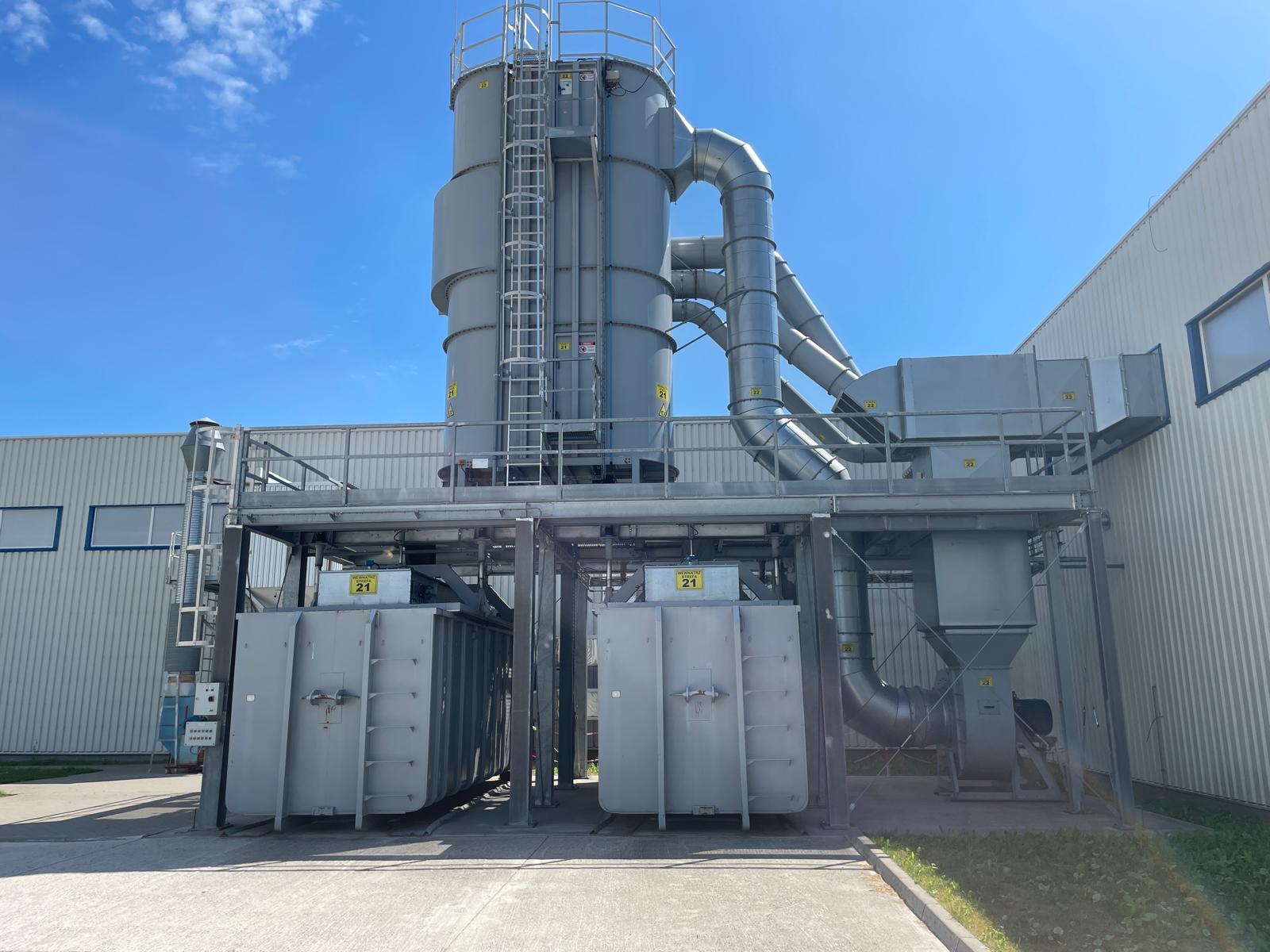
In practice, this means that a dust collection installation should also include a well-thought-out waste removal system, i.e. solutions responsible for transporting and collecting: sawdust, chips, dust, post-production waste, fractions from filtration and separation.
This is very important especially in smaller plants, where over the years a mixed system is often created: some waste goes into bags, some into bins, some into trailers, and some is sometimes temporarily accumulated where there happens to be space. Such a model may seem convenient on a daily basis, but over time it begins to generate problems.
What problems does poorly resolved waste removal cause?
The most common are:
– secondary dust when emptying bags or containers,
– unnecessary downtime when removing waste manually,
– more mess around the installation,
– risk of material deposition in uncontrolled areas,
– deterioration of the operation of the entire dust collection system,
– more fire and explosion risks.
In a well-designed plant, the waste discharge system should be consistent with the nature of production and the amount of material generated. Different solutions are needed for a small carpentry shop operating on a few machines, and others for a furniture plant with intensive cutting and sanding, or a sawmill generating large amounts of sawdust and wood chips.
Depending on the scale and needs, these may include:
– bagged or containerized waste collection systems,
– automatic material chute solutions,
– mechanical or pneumatic conveying systems,
– cyclones and pre-separators,
– buffer tanks and silos.
A well-solved waste discharge has a very tangible effect: the plant runs more stably, the plant is cleaner, and the handling is less burdensome for the employees.
And this is one of the elements that really makes a difference in daily operations.